Snow now covers nearly three quarters of the lower 48 states and 47 of the 48 have at least some snow. (NOAA)
For much of the lower 48 states of the United States the 2010 to 2011 winter season has been a rough one. Blizzards and snowstorms have stretched into the Deep South and this morning data shows that nearly three quarters of the nation is covered in snow.
The latest analysis from NOAA’s National Operational Hydrologic Remote Sensing Center shows 69.4% of the lower 48 states covered in snow as of this morning. This is a significant increase over the 33.1% cover seen in December and bests the previous snow season’s highest number.
Perhaps most interesting is that 47 of the lower 48 states and 49 of all 50 states including Hawaii have at least some snow with the only exception being Florida. Even the Deep South reaching nearly to the Gulf of Mexico is covered in a blanket of white today after ice and snow pummeled the region yesterday. Early this morning only five of the 48 did not have some sort of a winter weather warning or advisory in effect.
2010 was a relatively uneventful year for weather in Thornton.
Many years in Colorado are marked by significant weather events. The Christmas Blizzards of 2006, the severe thunderstorms that dominated June of 2009 or reaching even further back the Thornton Tornado of 1981. The same can’t entirely be said about 2010 as we experienced a relatively quiet year without any truly major events.
In terms of temperatures the year was slightly warmer than the historical average of 50.1 degrees. In 2010 Denver officially recorded an annual average of 51.2 degrees at Denver International Airport. Thornton was actually spot on Denver’s historical average at 50.1 degrees.
Denver temperatures ranged from a high of 102 degrees on July 17th down to -16 on January 7th. The July high was a record for the date but the January low didn’t fall far enough to set a record. Thornton’s high temperature for the year was 101.6 degrees and our low was -9.7 degrees – both occurring on the same dates as Denver’s.
The average high temperature for the year was 65.3 degrees – 1.1 degrees above normal. The average low was 37.0 degrees, 1.2 degrees above normal. Thornton’s average highs and lows were very close to Denver’s at 65.7 degrees and 36.8 degrees respectively.
DIA reported 47 days with temperatures at or above 90 degrees – 16 above normal. Thornton stayed cooler recording only 38 days. Low temperatures dipped below freezing on 158 days in Denver (2 above normal) while Thornton had one more with 159 days.
Snowfall
The first half of the 2010 to 2011 snowfall season was dismal as Denver recorded a mere 4.8 inches and Thornton recorded 4.9 inches. This is the second lowest total on record for the period with the only year with less snow being 1888 when 3.8 inches was recorded.
2010 Year in Review - A month by month narrative from the National Weather Service.
While Denver’s weather in 2010 was generally pretty quiet that isn’t to say there wasn’t something to talk about. Below is a month by month narrative from the National Weather Service for each month of the year.
JANUARY…ONLY A TOTAL OF 0.07 INCH OF LIQUID EQUIVALENT WAS COLLECTED DURING JANUARY 2010 WHICH CAME FROM MELTED SNOWFALL. THIS IS 0.44 INCH BELOW THE NORMAL OF 0.51 INCH. IT ALSO TIED 1961 AS THE 6TH DRIEST JANUARY SINCE DENVER RECORDS KEEPING BEGAN IN 1872. ONLY 2 DAYS RECORDED MEASURABLE MOISTURE WITH THE 6TH COLLECTING THE MOST IN A 24 HOUR PERIOD WITH ONLY 0.05 INCH. IN THE SNOWFALL DEPARTMENT WHERE MEASUREMENTS ARE TAKEN NEAR THE DENVER INTERNATIONAL AIRPORT (DIA)… ONLY 2.6 INCHES OF THE WHITE STUFF WAS RECORDED. THIS AGAIN WAS BELOW THE JANUARY NORMAL OF 7.7 INCHES. FOR THE SEASON…THE GOOD NEWS IS THAT THE JULY THROUGH JANUARY’S SEASONAL TOTAL WAS 40.2 INCHES WHICH IS 6.9 INCHES ABOVE THE NORM OF 33.3 INCHES FOR THAT PERIOD OF TIME. 40.2 INCHES IS FAR BETTER THAN THE 2008-09 SEASONAL TOTAL THROUGH JANUARY OF A MERE 16.9 INCHES. THERE WERE NO PRECIPITATION RECORDS SET OR TIED DURING THE MONTH.
JANUARY 2010 TEMPERATURE STATISTICS TURNED OUT TO BE A NON-HEADLINE. THE MONTH FINISHED WITH AN AVERAGE TEMPERATURE OF 30.4 DEGREES WHICH IS 1.2 DEGREES ABOVE THE 29.2 NORMAL. TEMPERATURES RANGED FROM A HIGH OF 58 DEGREES DOWN TO A LOW OF A NON-RECORD -16 DEGREES. IN FACT… THERE WERE NO TEMPERATURE RECORDS SET OR TIED DURING JANUARY 2010. ALL 31 DAYS HAD LOW TEMPERATURES AT OR BELOW FREEZING AND 3 DAYS HAD MINIMUM TEMPERATURES BELOW ZERO. TWO DAYS HAD HIGH MERCURY READINGS AT OR BELOW FREEZING. JANUARY 2009 SEEMED LIKE A COOL MONTH AS THERE WERE ONLY 7 READINGS THAT REACHED INTO THE FIFTIES. OBVIOUSLY THE REST OF THE MONTH ONLY SAW READINGS IN THE 40S OR BELOW.
THREE DAYS HAD DENSE FOG (VISIBILITY OF 1/4 MILE OR LESS) RECORDED AT DIA. LIGHT FOG WAS OBSERVED ON 8 DAYS. THE PEAK WIND DURING THE MONTH WAS A FAIRLY LIGHT GUST OF 35 MPH FROM A NORTHWESTERLY DIRECTION (310 DEGREES).
FEBRUARY…IT WAS A COOL FEBRUARY WITH THE MONTH FINISHING WITH A 29.1 DEGREE AVERAGE TEMPERATURE WHICH WAS 4.1 DEGREES BELOW THE NORMAL OF 33.2 DEGREES. EVEN THOUGH IT WAS 4.1 DEGREES BELOW NORMAL…IT WAS STILL 3.9 DEGREES BELOW THE 10TH COLDEST FEBRUARY WHICH WAS 25.2 DEGREES ESTABLISHED IN 1905. THE COLDEST FEBRUARY OCCURRED IN 1954 WITH A VERY FRIGID 17.6 DEGREE AVERAGE. THE FEBRUARY AVERAGE OF 29.1 DEGREES WAS COLDER THAN THE JANUARY 2010 30.4 DEGREE AVERAGE. TEMPERATURES DURING FEBRUARY RANGED FROM A HIGH OF 52 DEGREES ON THE 27TH DOWN TO A LOW OF -1 DEGREE ON THE 9TH. ONLY 3 DAYS DURING THE MONTH REGISTERED HIGHS IN THE 50S. ALL 28 DAYS REGISTERED OVERNIGHT LOW TEMPERATURES AT OR BELOW FREEZING WITH 8 DAYS WHEN THE HIGH TEMPERATURE DID NOT REACH ABOVE 32 DEGREES. ONLY 1 LOW TEMPERATURE DIPPED BELOW ZERO.
PRECIPITATION WAS ALSO BELOW NORMAL. THE MONTH FINISHED WITH ONLY 0.30 INCH OF LIQUID WHICH WAS MEASURED FROM WATER EQUIVALENT OF SNOW. THIS EQUATED TO 0.19 INCH BELOW THE NORMAL OF 0.49 INCH. NINE DAYS RECORDED MEASURABLE MOISTURE BUT THERE WAS NO DAYS THAT ACCUMULATED .10 INCH OR MORE. THE MAXIMUM 24 HOUR LIQUID MEASUREMENT WAS 0.10 INCH BUT THAT COVERED 2 DAYS…THE 7TH AND 8TH. IN THE SNOWFALL DEPARTMENT…5.8 INCHES OF SNOWFALL WAS MEASURED AT THE AIRPORT. THIS WAS ONLY 0.5 INCH BELOW THE NORM OF 6.3 INCHES. THE 24 HOUR SNOWFALL MAXIMUM WAS 1.7 INCHES ON THE 20TH AND 21ST. THERE WERE NO PRECIPITATION OR SNOWFALL RECORDS SET OR TIED DURING THE MONTH. THE DRIEST FEBRUARY WAS 0.01 INCH COLLECTED IN 1970 AND THE WETTEST FEBRUARY WAS 2.01 INCHES IN 1934. THE MOST FEBRUARY SNOW OCCURRED IN 1912 WITH 22.1 INCHES WHILE THE LEAST AMOUNT OF FEBRUARY SNOWFALL WAS A TRACE WHICH OCCURRED JUST LAST YEAR…2009.
THE AVERAGE FEBRUARY WIND SPEED WAS 7.6 MILES PER HOUR WHILE THE PEAK GUST DURING THE MONTH WAS ONLY 35 MPH FROM A SOUTHWESTERLY DIRECTION (210 DEGREES).
The March 2003 blizzard that buried Thornton in snow was ranked as the top weather event of the past 10 years. (ThorntonWeather.com)
There is a lot that can be said about the weather in Colorado but ‘boring’ is not usually a term associated with it. Anyone who has lived in the Centennial State for very long quickly experiences a weather-related event that will give them memories for a lifetime.
From major snowstorms and blizzards to tornadoes, wildfires, scorching heat and damaging hail storms Colorado weather can and does bring it all to the table. The Denver office of the National Weather Service has released a list of what local meteorologists rank as the top 10 weather events of the past 10 years.
For some it may be a blizzard that buried the Mile High City in a heavy blanket of snow and brought everything to a standstill. Others will remember the heavy smoke from fires burning in the mountains destroying hundreds of thousands of acres. The tragedy tornadoes bring to Colorado in terms of destruction and loss of life may be what others remember.
Over the past 10 years many memorable weather events have occurred that fully display the sheer variety of weather Colorado receives. A team of meteorologists serving Colorado analyzed these events and ranked them based on meteorological intensity and their human and economic impact.
Widespread snow from the Sierra Nevada to the Colorado Rockies snarled travel leading up to the Thanksgiving holiday. As the holiday weekend wraps up, NASA has released satellite imagery showing just thousands of square miles coated in a blanket of white.
Read more below the image.
NASA's Terra satellite captured stunning imagery of the pre-Thanksgiving snow across the western United States.
The winter weather conditions delayed flights and forced road closures starting last weekend and lasting up to Thanksgiving. Some of the snow totals from Saturday the 20th through Saturday the 27th include:
Salt Lake City, Utah – 9.9 inches
Pocatello, Idaho – 9.0 inches
Boise, Idaho -5.0 inches
Elko, Nevada – 8.4 inches
Yakima, Washington – 6.2 inches
Missoula, Montana – 8.4 inches
Much higher amounts were recorded in the higher elevations making for very happy ski resorts and skiers. Alpine Meadows near Lake Tahoe reported 8.5 feet of snow at mid-mountain. In Wyoming, Jackson Hole opened all of its runs on its opening day, the first time it has been able to do so in 45 years.
In western Colorado ski areas were very happy to receive the snow leading up to the busy holiday season with Steamboat having its best opening in 10 years. Loveland Ski Area reported nearly 3 feet of snow depth at mid-mountain.
The image released by NASA and taken by its Terra satellite show a wide swath of snow cover from Oregon across Nevada, Idaho and Utah to Colorado. Click on the image to the above left to view the full size, high resolution image.
From NASA:
In most of the western part of the United States, Thanksgiving Day came with a coating of snow. Ski resorts from California’s Lake Tahoe region to the Colorado Rockies reported several feet of snow from a storm system that passed through in the days before, bringing a welcome early opening to the ski season. Travelers throughout the West, however, did not share skiers’ enthusiasm for the weather. Winter weather advisories were causing flight delays and cancellations throughout the northwestern-most states. The same storm system that brought as six inches of snow to Utah and Idaho on November 23 also brought heavy snow to North Dakota and Minnesota the next day. Severe wind chill conditions were reported throughout the Great Plains on November 25 as well.
This image shows a portion of the western U.S. on November 25, 2010 (Thanksgiving Day). It was acquired by the Moderate Resolution Imaging Spectroradiometer (MODIS) on NASA’s Terra satellite. White snow decorates the ground from California’s Sierra range eastward throughout Nevada, Utah, and Colorado, ending at the front range of the Rockies in Colorado. Further north along the top edge of the image, the snow runs solidly from Oregon to Idaho and Wyoming off the northern and eastern edges of the image.
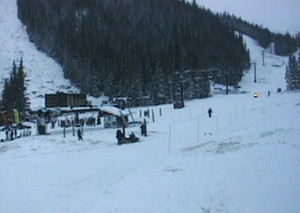
Snow covers Loveland Ski Area this morning as they prepare to open for the first time of the season. (Loveland Ski Area)
Down here along the Front Range we continue waiting for our first snow but in the high country Mother Nature brought white gold in recent days. The 2010 ski season will kick off this morning as Loveland Ski Area opens and Arapahoe Basin will follow suit tomorrow.
The annual race to be the first ski area in Colorado to open is running a bit behind schedule as warmer than normal weather postponed the openings. The contest usually comes down to Loveland and A-Basin and for the second year in a row Loveland will be the winner.
Check out the announcement from Loveland in the video below
Loveland recorded five inches of snow Friday night and more throughout the day Saturday to add to their manmade base. Overnight Saturday and into Sunday morning snow has continued to fall assuring conditions will be more than adequate for the scheduled 9:00am opening.
On the other side of the Continental Divide in Summit County, A-Basin will open at 9:00am on Monday. The resort will also be opening with its new Black Mountain Express high speed chairlift.
A series of winter weather systems are forecast to move across the Colorado mountains in the coming days helping to add to the snow totals and pushing other areas closer to their openings. Winter Storm Warnings have been posted for mountain areas west of the Divide and Winter Storm Watches for the north central mountains on the west side.
The Fourmile Canyon Fire is seen crowning on the tops of trees soon after it started. Check out more amazing photos from the fires below. (U.S. Forest Service)
It seems like it had been a while since Colorado suffered a major wildfire and summer had indeed passed quietly in those terms – until Labor Day.
Spurred on by strong winds and fed by tinder dry fuels the Fourmile Canyon Fire in Boulder County soon exploded and served as a reminder that the fire danger was still with us. Photos taken during that blaze and the Reservoir Road Fire tell a story of the battle of man against nature.
Wildfires can quickly grow from a small event to one that covers thousands of acres destroying property and sometimes claiming lives in the process. Colorado dodged a bullet with the Fourmile Canyon Fire and the Reservoir Road Fire as no lives were lost and there were very few injuries.
Many residents in the burn areas however suffered other losses — that of their home and virtually every belonging they owned. The events torched over 6,500 acres combined and the Fourmile Canyon Fire became the most destructive in state history in terms of homes destroyed, as 166 houses were lost.
Photos taken from the outset of the first fire were impressive. Some were taken from right next to the fire as residents worked to save their homes; others were captured from 22,300 miles in space by NOAA satellites showing smoke traveling across three states.
The images in the slideshow to the left represent the best images captured by Examiner.com readers, the U.S. Forest Service and professional photographers. They tell a compelling story of the fight between man and fire and the battle to save lives and property.
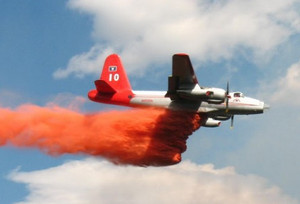
A slurry bomber drops retardant on the Fourmile Canyon Fire. (USFS) View more images in the slideshow below.
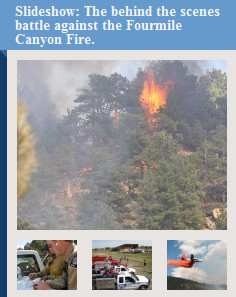
Much like words have been used to tell the story of the Fourmile Canyon Fire and its destructive power, so too have photos and video. The U.S. Forest Service has released new photos taken by their crews that tell the story in a way that hasn’t been seen yet – from behind the fire lines.
The images taken by the U.S. Forest Service (USFS) are stunning testaments to the bravery of the firefighters on the scene. Photos of chainsaw wielding combatants, slurry bombers dropping their bright red retardant, and fire raging next to roadways tell the story from behind the lines.
You can view the new images by clicking on the slideshow image below.
Below are links to other slideshows we published on Examiner.com over the past week.
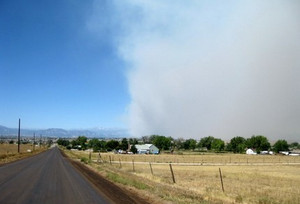
The Fourmile Canyon Fire sent smoke over Thornton on Monday. (ThorntonWeather.com)
A fast moving wildfire burning northwest of Boulder sent smoke over Thornton on monday and more is expected today. The Fourmile Canyon Fire started late Monday morning and has burned 3,500 acres thus far.
Tinder dry fuels, low humidity, warm temperatures and gusty winds fueled the Fourmile Canyon Fire yesterday as it grew quickly. Firefighters took up defensive positions trying to save what homes they could but many were reduced to cinder.
More than 100 firefighters are on scene with 35 engines from 30 local agencies. Boulder County Fire is acting as the primary agency for the fire.
High winds prevented air tankers with retardant from operating for most of the day but the wind eased in the late afternoon and evening allowing some operations. 18 flights by three tankers were carried out before the sun set and they were able to drop 40,000 gallons of retardant on the fast moving fire.
Four additional tankers arrived Monday and will begin operations today, weather permitting.
Colorado storm chaser Roger Hill was shown on the Drudge report and that led to appearances on most major TV networks.
Roger Hill is considered quite famous among storm chasers as he has a proven, uncanny ability to place himself right where severe weather will strike. A recent headline on the Drudge Report featuring Hill has now shined the national media spotlight on him and his profession as co-owner of a storm chasing tour company.
Hill is no stranger to the media as his amazing videos and photos have been featured on the Weather Channel, Discovery Channel, National Geographic and all major news networks. For nearly a decade Hill and his company Silver Lining Tours have been showing thrill seekers what it is like to experience severe weather at closer range than what may be possible otherwise. Interest in “storm chasing tours” however has hit a fevered pitch in recent weeks.
Crews from Inside Edition and Nightline then followed by riding along with Hill and Silver Lining Tours as they crisscrossed the Great Plains on the hunt for tornadoes.
The Nightline piece aired this past Friday and gave a good idea of what it is like to be on tour with Hill (watch the video below). From the frenzied pace to the seemingly endless ingestion of fast food and of course the thrill of the tornado chase, reporter Eric Hong experienced it all.
Weather, natural disasters & climate news and information.