
Coloradans dreaming of a white Christmas will certainly get their wish this year. Satellite imagery from NASA taken today shows the Centennial State covered in snow following recent snowstorms that hit the region.NASA's Aqua satellite circles…

Read the rest of this story on Examiner.com
Snowfall reports for Denver’s pre-Christmas snowstorm, December 21 – 22, 2011
Denver welcomed in the official start of winter in seasonal fashion with a snowstorm that has blanketed the Mile High City in white. The proverbial white Christmas is a sure thing now as most of the Front Range has…

Read the rest of this story on Examiner.com
Dreaming of a white Christmas: A look back at Denver’s Christmas weather
For many the holiday season isn’t complete without a chill in the air and snow on the ground. Here in Denver we historically enjoy a better chance of experiencing the proverbial white Christmas than many places in…

Read the rest of this story on Examiner.com
December 18 to December 24 – This Week in Denver Weather History
Looking back at Denver weather history, it is readily apparent that the week leading up to Christmas has historically been a very eventful one. There are certainly many of the snow and wind events we would expect to see. Most notable however are the major winter storms like the pre-Christmas storm of 2006 and of course what is arguably Denver’s most famous winter storm, the Christmas Eve Blizzard of 1982.
From the National Weather Service:
17-24
In 1924…a prolonged cold spell occurred after mild temperatures during the first half of the month. Most low temperatures dipped below zero with the coldest reading of 15 degrees below zero occurring on the 24th. The high temperature of only 5 degrees on the 18th was a record low maximum for the date.
18
In 1901…north winds were sustained to 52 mph with gusts to 58 mph behind an apparent cold front.
In 1973…a brief blizzard dumped heavy snow across metro Denver. Snowfall totaled 9.2 inches at Stapleton International Airport where north winds gusting to 53 mph produced much blowing snow. The storm forced many schools and businesses to close.
In 1996…a homeless man in Denver was found unconscious in his car suffering from exposure. The man’s body temperature was only 85 degrees when he was discovered. He died several hours later. Early morning temperatures had dipped to 9 degrees below zero.
In 1999…high winds were reported for a brief time in the foothills. Winds gusted to 72 mph in Golden Gate Canyon and to 71 mph at the National Center for Atmospheric Research in the foothills southwest of Boulder. West winds gusted to only 39 mph at Denver International Airport where the temperature warmed to a high of 53 degrees.
In 2002…only a trace of snow fell at the site of the former Stapleton International Airport. This…along with the trace of snow on the 5th…was the only snow of the month…ranking the month the 2nd least snowiest on record.
18-21
In 2010…a winter storm produced a 4-day period of moderate to heavy snow in the mountains. The combination of strong wind and heavy snow forced the closure of several mountain passes due to the threat of avalanches. The Amtrak train route… Which runs from Denver to California…was rerouted through Wyoming when Union Pacific closed its tracks along Interstate 70. Numerous accidents forced the closure of I-70 at times. The wind gusted to 60 mph over the higher mountain passes. Storm totals in the ski areas west of Denver ranged from 16 to 32 inches.
18-24
In 1998…a vigorous cold front with north winds gusting as high as 38 mph at Denver International Airport on the 18th dropped temperatures from a high of 51 degrees to a low of just 6 degrees before midnight. The arctic air mass that settled over metro Denver produced intermittent light snow and a week-long protracted cold spell that caused low temperatures to plunge well below zero for 6 consecutive nights. The coldest temperature was 19 degrees below zero on the morning of the 22nd. High temperatures climbed only into the single digits on 4 consecutive days…from the 19th through the 22nd. At least 15 people…mostly homeless… Were treated for hypothermia at area hospitals. The bitter cold weather was responsible…either directly or indirectly… For at least 5 fatalities. Three of the victims died directly from exposure. The cold weather also caused intermittent power outages. Following the cold snap… Thawing water pipes cracked and burst in several homes and businesses…causing extensive damage. Only one temperature record was set. The high temperature of only 7 degrees on the 19th set a record low maximum for the date.
Continue reading December 18 to December 24 – This Week in Denver Weather History
The voice of NOAA Weather Radio All Hazards sings Deck the Halls
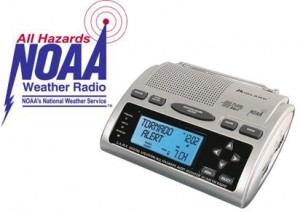
NOAA Weather Radio (NWR) is called ‘the voice of the National Weather Service’ and provides critical and life saving information when severe weather strikes. ‘Tom’ is one of the latest voices that you hear when listening to it and in the holiday spirit, NOAA had ‘Tom’ sing a classic Christmas carol.
- Listen to ‘Tom’ sing Deck the Halls below
NWR began in the late 1990s and now transmitters for the service allow coverage across most of the nation. When the weather is calm, listeners hear current conditions, forecasts and other weather related news. It is however when severe weather strikes that NWR reaches its real potential.
Many of today’s radios can be programmed to turn on automatically and sound an alert when severe weather or another national emergency occurs. These alerts can make the difference between life and death, particularly when a fast developing situation like tornadoes occur.
We have long extolled the virtues of the system and recommended that all homes should have them, particularly in places like Colorado that are prone to tornadoes. It can also provide critical information during other types of disasters like earthquakes, chemical spills, and AMBER alerts.
‘Tom’ is one of the current text to speech voices of NOAA Weather Radio. He, along with ‘Donna’ and ‘Javier’ are the voices you hear when listening to the system.
- A weather radio makes a great gift during the holiday season. Check out some other great gift ideas for weather enthusiasts (Examiner.com)
- More about weather radios – your first line of defense against extreme weather
Updated NOAA outlook for winter indicates chance for increased precipitation for northern Colorado
The National Oceanic and Atmospheric Administration’s Climate Prediction Center (CPC) released updated outlooks for winter 2011 – 2012 indicating it could be a snowy one for the northern half of Colorado.
The original outlooks from the agency released previously offered a drier picture, primarily based on the influences of La Niña in the Pacific. Given however that the current event is relatively mild, its effects are limited, particularly this far inland.
For the meteorological winter from December 2011 to February 2012, NOAA places virtually all of Colorado in an area that has equal chance of well above, well below, or near-normal temperatures. However, the northern half of the state, including Denver, is given a 33% chance of experiencing above normal precipitation.
NOAA said:
The winter outlook for this winter favors above average temperatures across much of the South, from New Mexico across the Southeast to the Atlantic coast… and also favors below average temperatures across much of the Northern plain, the Northern Rockies, the Pacific Northwest, and a good part of the West as well as the southern half of Alaska.
With regards to precipitation, we see those areas most likely to experience below-average precipitation across the South– in particular Florida and Texas– with a better than even chance of being wetter than average across much of the North– particularly from the Ohio valley and the Northern Rockies and the Pacific Northwest.
Last year, Denver experienced second least snowiest snow season on record as the city only recorded 22.8 inches (21.2 inches in Thornton). This season the picture is much improved with 22.2 inches having been recorded so far – nearly as much as all of last season.

On the net:
- NOAA Video: Winter Outlook for 2011 – 2012
- NOAA Story: 2011-2012 Winter Outlook
December 11 to December 17 – This Week in Denver Weather History
This time of year snow is a common occurrence but in our look back at this week in Denver weather history we are struck by the lack of significant snow events in the history books for the period. What we do see instead are a number of high wind events, many of which caused widespread damage.
From the National Weather Service:
2-17
In 1939…more than 2 weeks of unseasonably warm weather made the month the 3rd warmest on record. Seven daily temperature records were set…including the all time record high temperature for the month of 79 degrees on the 5th. Daytime highs were balmy with 14 days in the 60’s and 70’s. Low temperatures dipped to freezing or below on only 5 days. The period was dry with only a trace of snow on the 12th.
3-15
In 1972…a protracted cold spell held an icy grip on metro Denver when maximum temperatures never reached above freezing for 10 consecutive days from the 3rd through the 12th and minimum temperatures dipped below zero on eleven consecutive days from the 5th through the 15th. Daily low temperature records were set with 15 degrees below zero on the 5th…17 degrees below zero on the 6th… And 18 degrees below zero on the 10th. Daily record low maximum readings were set with 3 degrees on the 6th and 6 degrees on the 9th. The very cold temperatures were caused by 3 to 5 inches of snow cover and a Canadian air mass.
8-12
In 1932…the second longest sub-zero period on record in Denver occurred. The temperature fell below zero shortly after 1:00 pm on the 8th and remained below zero for 92 hours until 9:00 am on the 12th. The lowest temperature recorded during this period was 13 degrees below zero on both the 9th and 11th. That temperature on the 11th was a record low for the date. High temperatures of 4 on the 8th…5 below zero on the 9th…1 below zero on the 10th… And 6 below zero on the 11th were record low maximum temperatures for those dates. Light north winds at 5 to 10 mph were accompanied by occasional light snow…which totaled only 2.2 inches.
9-13
In 1961…cold arctic air produced a protracted cold period. The temperature plunged to 16 degrees below zero on the 10th…establishing a new record for the date and the coldest reading since 25 degrees below zero on February 1… 1951. Low temperatures dipped below zero on 5 consecutive days with 9 degrees below zero on the 9th…16 below on the 10th…10 below on the 11th…and 12 below on both the 12th and 13th. High temperatures reached only 3 degrees on the 10th and 6 degrees on the 11th.
10-11
In 1933…downslope winds produced warm temperatures…resulting in record high minimums of 46 degrees on the 10th and 44 degrees on the 11th. High temperatures of 66 degrees on the 10th and 62 degrees on the 11th were not records. Southwest winds were sustained to 16 mph on the 10th.
In 1939…high temperatures of 70 degrees on the 10th and 74 degrees on the 11th were record maximums for the dates. The low temperatures of 39 degrees on the 10th and 41 degrees on the 11th were not records.
In 1948…high winds in Boulder and Louisville caused 1750 dollars in damage. Wind gusts in excess of 70 mph were reported at Valmont and Boulder airport. Chinook wind gusts to 60 mph briefly reduced the visibility to 1/4 mile in blowing dust at Stapleton Airport.
In 1989…the season’s greatest snowfall to date hit metro Denver with 6 to 12 inches of snow. Flight delays at Stapleton International Airport reached 2 hours. Multiple wrecks snarled traffic on I-25 both north and south of the city. Snowfall totaled 7.0 inches at Stapleton International Airport where north winds gusted to 25 mph on the 10th.
Continue reading December 11 to December 17 – This Week in Denver Weather History
City of Thornton’s WinterFest to enjoy great weather for the festivities

The City of Thornton’s annual winter festival is in full swing and after a chilly start Friday, the weather for the rest of the events looks to be much milder.
Santa Claus arrives safely last night and as always, the city has a full slate of events surrounding WinterFest at the Multipurpose Fields at 108th Ave and Colorado Blvd. Residents can ice skate all day long and into the night, the ice carving demonstration is underway and of course Santa’s Village is open.
Tonight the Thornton Community Band will take to the stage at 7:00pm showcasing our community’s musical talent. After the concert, Thornton will put on a fireworks show at 8:30pm, one of the few in Colorado during the winter and always the best.
- Stay up to date with ThorntonWeather.com: ‘Like’ us on Facebook, follow us on Twitter and add us to your Google+ circles
Sunday features the wide variety of fun in Santa’s Village. Tomorrow night the Thornton Community Chorus will raise their voices in celebration of the season.
For the weather, today we’re heading for a high of 45 degrees with just a light wind. It will dip to right around the freezing mark by 7:00pm when the band concert takes place and then down to 28 degrees for the fireworks at 8:30pm.
Tomorrow will be even warmer with plenty of sun above as we head for a high of 48 degrees with light winds. When the chorus takes to the stage at 6:30 it will be around 32 degrees.
Check out some of the photos we took of WinterFest last night below – then head on down and join the fun!
Thornton gets front row view of the last lunar eclipse until 2014

It was a very cold morning in Thornton as the temperature dropped to 15° but the fog that was forecast never materialized and we had a great view of the lunar eclipse. Just before dawn the Earth’s shadow began to encroach on the moon and just as the eclipse was peaking, the moon set behind the Rocky Mountains.
- View images of the lunar eclipse as seen from Barr Lake State Park below
Fog in Denver was feared to be a threat for viewing this morning’s total lunar eclipse but Mother Nature cooperated and provided clear Colorado skies. Not long before dawn the celestial show began and those who were able to witness it saw something that we won’t have an opportunity to see again until 2014.
NASA had called the lunar eclipse a ‘super-sized’ event due to its low placement on the horizon which tricks the mind and eye to thinking the moon is larger than it normally is. With our only natural satellite setting in the west, Coloradoans were able to view the eclipse just as the moon set behind the Rocky Mountains.
The total lunar eclipse was visible across a large swath of the Earth. From east of the Rocky Mountains to Australia and to Asia, nearly half of the globe had a view of the event.
Heightening interest in the eclipse was the fact that it will be the last total lunar eclipse for nearly three years. The next one won’t occur until April 14, 2014. There will be a second one that year on October 8th. In 2015 there will also be two; one on April 4th and another on September 27th.
Clear skies provide prime lunar eclipse viewing in the Mile High City
Fog in Denver was feared to be a threat for viewing this morning's total lunar eclipse but Mother Nature cooperated and provided clear Colorado skies. Not long before dawn the celestial show began and those who were…

Read the rest of this story on Examiner.com