Colorado’s weather is notoriously fickle capable of dispensing an entire gamut of weather in a very short period of time. The month of March typifies this as we can see everything from major snowstorms and bitter cold to summer-like temperatures and tornadoes.
These changes are due to Marches “in between” status – elements during the month have much in common with winter and spring. In addition to arctic fronts, Pacific storms frequently move across Colorado from the west and warm moist air streams up from the Gulf of Mexico northeastward into the state. When these cold fronts collide with the warmer air masses the result can be some crazy weather.
February 27 to March 5 - This Week in Denver Weather History
As we wrap up February and head into March, our look back at this week in Denver weather history reminds us that winter weather conditions can and do still happen. We see numerous reports of bitter Arctic cold, damaging winds, and heavy snowfall.
22-29
In 1960…heavy snowfall of 6.1 inches at Stapleton Airport on the 22nd and 23rd marked the beginning of a protracted cold spell which lasted until the end of the month. The cloudy… Cold weather was accompanied by occasional light snow or flurries and fog. New record low temperatures for the dates were set on the 24th thru the 29th with the lowest temperature of 11 degrees below zero on the 28th. The seven consecutive days of low temperatures of zero or below had been exceeded in duration only 4 times previously. New low maximum temperatures for the dates were set on the 23rd… 24th…and the 26th thru the 29th with the lowest maximum temperature of 8 degrees recorded on the 26th.
26-27
In 1893…heavy snowfall totaled 7.9 inches in downtown Denver. Most of the snow…6.7 inches…fell on the 27th. Northeast winds were sustained to 18 mph with gusts to 30 mph behind an apparent cold front.
In 1939…heavy snowfall of 8.1 inches was the heaviest of the month in downtown Denver. North winds sustained to 21 mph on the 26th and to 28 mph on the 27th caused much drifting. The greatest snow depth on the ground was 7.8 inches at noon on the 27th.
In 1987…a snowstorm dropped 4 to 8 inches of snow across metro Denver…causing flight delays at Stapleton International Airport where snowfall totaled 3.8 inches and north winds gusted to 24 mph. Both I-70 and I-25 were closed for a time to the east and south of Denver.
27
In 1896…northwest winds were sustained to 46 mph with gusts to 58 mph.
In 1902…northwest winds were sustained to 50 mph with gusts as high as 60 mph. The high temperature was 44 degrees.
In 1918…a post-frontal heavy snow storm developed over downtown Denver. Snowfall totaled 8.4 inches and north winds were sustained to 30 mph with a maximum velocity to 32 mph.
In 1963…west winds gusted to 55 mph at Stapleton Airport.
In 1974…a wind gust to 99 mph was recorded in Boulder. West winds gusted to 43 mph at Stapleton International Airport.
In 2009…a strong wind gusts blew a trailer in the path of two vehicles along State Highway 36…between Boulder and Lyons. The two vehicles were in the northbound lane when a wind gust blew a fifth-wheel trailer into their path… As it approached from the opposite lane. The trailer left the road surface…and collided with the top left side of the first car; causing extensive damage. A van following the first vehicle then struck the trailer. The driver of the van suffered facial injuries.
NASA satellite imagery reveals that at one point in January 2011 the nation saw its fifth largest snow cover extent. Click the image for a larger view. (NASA)
How much snow has fallen this season in Colorado all depends on where you are. The high country has continued to see snowfall far in excess of normal while here on the Plains we remain mostly dry. For the nation, a new NASA satellite image reveals that 71 percent of it was covered in snow at one point last month.
The new image (right), taken by NASA’s Terra satellite using its Moderate Resolution Imaging Spectroradiometer (MODIS), reveals a snow covered contiguous United States in January.
The image uses false colors to show the snow extent and the length of time it was on the ground. White areas were completely covered with snow for most of the month whereas the pale green areas had snow for part of the month or were only partly snowy.
On January 12, 71 percent was covered in snow – the fifth largest amount of snow cover in the past 45 years. In fact, 49 of the 50 states had snow thanks to a significant winter storm that pummeled the Gulf Coast states with Florida being the only hold out.
Despite the expansive snow cover, the National Climatic Data Center said that January 2011 was the ninth-driest January in the United States since 1894. Further, while snow reached the Gulf Coast states, the southern half of the nation has been very dry with a large area from stretching Arizona to Virginia considered in various stages of drought.
Eastern Colorado is now seeing areas of moderate to severe drought as the lack of snowfall we have seen takes its toll. In Denver we have recorded only 18.1 inches of snow so far this season – 21.5 inches below what we would normally see through the end of February. Thornton has barely fared better recording 18.5 inches so far.
A proposed 30% cut in the National Weather Service's budget could lead to greater loss of life. (Examiner.com)
The National Weather Service is the nation’s frontline of defense against many forms of threats from Mother Nature. As the sole agency responsible for issuing weather related warnings and alerts, a proposed massive cut in the budget for the service could have dire consequences.
Colorado’s weather is as varied as any state in the union. Our true four seasons allow us to witness the entire gamut of weather from scorching hot summers to winters buried in feet of snow to springtime severe weather with damaging and deadly tornadoes. Knowing what is going on with the weather is critical in allowing us to protect ours and families’ lives.
Budget cuts being proposed in Washington DC could severely decrease the accuracy and frequency of weather related information we receive. A massive cut of $126 million to the National Weather Service’s budget is being proposed – a full 30% cut in funding for a service that provides information that saves lives every day.
When you view a detailed forecast on ThorntonWeather.com that is specifically for Thornton, you are viewing data provided by the National Weather Service. Our radar imagery, weather radio, the watches and warnings that we post – all originate from the National Weather Service.
A building's facade lies in the street after the earthquake in Christchurch, New Zealand. Click the image to view a slideshow. (TwitPic / bebe33)
Christchurch, New Zealand was struck by a powerful magnitude 6.3 earthquake on Tuesday that wreaked havoc across the nation’s second largest city. Buildings were reduced to rubble and people buried alive in what is being called the ‘darkest day’ in the New Zealand history.
In September the area was struck by a magnitude 7.1 earthquake and recovery efforts from that quake were still underway when the new quake struck. Buildings that were already weakened by last year’s quake, then the initial quake today struggled to hold up with the ongoing aftershocks.
Prime Minister John Key said, “It is just a scene of utter devastation. We may well be witnessing New Zealand’s darkest day.”
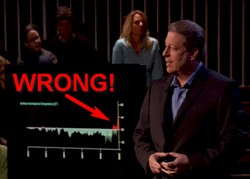
Despite having been proven wrong in the past, at a symposium in Aspen this weekend Al Gore once again tried to tie recent severe weather to global warming.
Former Vice President Al Gore spoke at the “Forests at Risk: Climate Change and the Future of the American West” symposium in Aspen this weekend issuing a dire warning about global warming. Gore told the crowd, “It’s unprecedented and we really have to face up to it.”
The Nobel Laureate and author of the book and movie “An Inconvenient Truth” warned that the pine beetle infestation striking Colorado forests was caused by manmade climate change. “If you love the forest and you care about what’s happening to them, the No. 1 connection that’s happening to them is warmer temperatures,” Gore told the compliant crowd.
Utilizing a slideshow to demonstrate his point, Gore said, “The linkage these scientists have referred to over and over again with global warming is something some people resist but it’s a fact.”
…
Gore’s attempts to draw parallels between weather and climate change have gotten him into trouble in the past. He was forced to pull images from his popular presentation two years ago that showed an increase in natural disasters when it was found it could not be proven. NASA’s top climate scientist Dr. James Hansen has rebuked Gore saying he needed to be more “careful” in his claims.
The claims that Gore made at the symposium have been refuted in the past but he remains undeterred. Get more details on what the former VP said as well as counter arguments on the Denver Weather Examiner.
The redesigned Weather Underground website is a great source for weather information. (WeatherUnderground.com)
Certainly for truly local, Thornton weather, ThorntonWeather.com is the place to go. However you sometimes want a bigger picture or details on the weather for a different location and for that, a newly revamped Weather Underground website is the place to go.
We here at ThorntonWeather.com are big fans of the Weather Underground. The site has always provided much greater depth and detail with more features than local media outlets and even more than the ‘big names’ like the Weather Channel.
Further, Weather Underground brings in the data from thousands of personal weather stations (PWS) like ThorntonWeather.com’s and uses those to provide local conditions to visitors – not airports miles away. In return, Weather Underground allows PWS owners to use their data freely, something which we do on ThorntonWeather.com and truly appreciate the reciprocity.
Where does ThorntonWeather.com use Weather Underground data?
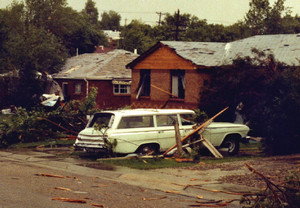
On June 3, 1981, Thornton was the site of the most destructive tornado in the history of the Denver metro area. Storm spotter training gives you the education you need to keep you and your family safe. (City of Thornton archives)
Severe weather is a fact of life in Colorado – from blizzards to tornadoes we can and do see it all. Each year the weather is responsible for claiming lives in our state and across the nation and the threat is very real. Storm spotter training allows you to learn how to protect yourself and your family while providing a public service.
Education is key to knowing how to protect you and your family. Whether you want to be an official storm spotter or maybe just want to learn more about severe weather, storm spotter training can provide you an incredible opportunity to learn.
The storm spotter program is a nationwide program with more than 280,000 trained spotters. These volunteers report weather hazards to their local National Weather Service office providing vital information when severe strikes. Data from spotters include severe wind, rain, snow measurements, thunderstorms and hail and of course tornadoes.
Storm spotters are part of the ranks of citizens who form the Nation’s first line of defense against severe weather. There can be no finer reward than to know that their efforts have given communities the precious gift of time–seconds and minutes that can help save lives.
By completing one of these training classes you can become an official storm spotter. When severe weather strikes, you can report it by calling a special toll free number or submit your report via the National Weather Service’s website.
February 20 to February 26 - This Week in Denver Weather History
This past week we have enjoyed spring-like weather and it is easy to forget we are still very much in winter. Looking back at this week in Denver weather history we see that bitter cold and heavy snow are the alternatives that we can and have seen in our past.
From the National Weather Service:
18-20
In 1913…post-frontal snowfall totaled 6.9 inches in downtown Denver over the 3 days. Most of the snow fell on the 19th. Northeast winds were sustained to 21 mph with a measured extreme velocity to 24 mph on the 18th.
In 1924…light snowfall totaled 4.6 inches over the 3 days. This was the only measurable snowfall of the month. High temperatures plunged from 45 degrees on the 18th to 17 degrees on the 20th. Low temperatures dipped from 31 degrees on the 18th to only 8 degrees on the 20th. Northeast winds were sustained to 24 mph on the 19th.
In 1953…a major blizzard dumped 10.6 inches of snowfall at Stapleton Airport. Strong north winds at sustained speeds of 25 to 35 mph with gusts as high as 44 mph frequently reduced visibilities to 1/4 mile in blowing snow during the day of the 19th. The strong winds caused much drifting snow…making accurate snowfall measurements almost impossible. Precipitation from the storm totaled 1.13 inches. The 1.01 inches of precipitation on the 19th was the greatest calendar day and 24 hour precipitation ever recorded in the city during the month of February.
In 1987…large amounts of new snow fell in the Front Range foothills. The foothills received 10 to 20 inches of new snow with 4 to 8 inches on the adjacent plains. On the 19th…flight delays occurred at Stapleton International Airport where snowfall totaled 4.2 inches and east winds gusted to only 18 mph on the 19th. Schools were closed in the foothills above Boulder.
19-20
In 1924…4.6 inches of snow fell in downtown Denver. This was the only measurable snow of the month. Northeast winds were sustained to 24 mph on the 19th.
In 1937…post-frontal heavy snowfall totaled 8.4 inches over downtown Denver. Most of the snow…6.6 inches…fell on the 20th when north winds were sustained to 16 mph with gusts to 18 mph. The temperature dipped to a low of 9 degrees on the 20th.
In 1939…post-frontal snowfall totaled 5.4 inches in the city. The snow covered streets and highways with a coating of ice as the temperature fell from 36 degrees at 2:00 pm on the 19th to a low of 4 degrees at 3:00 am on the 20th. Many motorists were marooned for several hours. Northeast winds were sustained to 24 mph on the 19th.
19-21
In 1971…heavy snowfall totaled 9.0 inches at Stapleton International Airport where north winds gusted to only 16 mph. Most of the snow occurred on the 19th and 20th. The 24 hour snowfall of 8.2 inches was the greatest in February since 1953.
Did you know there is no such holiday as "Presidents Day?" The holiday is technically titled "Washington's Birthday" per Section 6103 (a) of Title 5 of the United States Code.
The holiday began with an Act of Congress in 1880 and was for government offices in Washington DC. It was expanded in 1885 to include all federal offices and was celebrated on George Washington’s actual birthday of February 22.
Then, in 1971 the Uniform Monday Holiday Act shifted the celebration to the third Monday of each February so now the date can range anywhere from the 15th to the 21st. An early draft of that act would have renamed the holiday to Presidents Day but it failed in a Congressional committee in 1968.
So there you have it. When someone says something about Monday’s holiday being Presidents Day, you can correct them and tell them there is no such holiday.
Q. Why did the National Weather Service (NWS) change its weather forecast references from Presidents Day to Washington’s Birthday in 2011?
A. Weather forecast references were changed because the holiday is officially designated as “Washington’s Birthday” in Section 6103 (a) of Title 5 of the United States Code, which is the law that specifies holidays for Federal employees. Although other institutions such as state and local governments and private businesses may use other names, it is NWS policy to refer to holidays by the names designated in the law.
Q. Wasn’t the holiday changed to Presidents Day when it was established by Congress to be observed on the third Monday in February?
A. No. The effort to rename the holiday Presidents Day, intended to honor the birthdays of both Washington and Lincoln, failed in Congressional committee. The bill, which was then signed into law on June 28, 1968, specified that the Federal holiday would retain the name Washington’s Birthday. The Uniform Monday Holiday Act of January 1, 1971, established its observance on the third Monday in February.
Q. What changes did the NWS implement to make this change?
A. The NWS changed the software on all its Internet web pages and at all local Weather Forecast Offices so that forecasts which include Washington’s Birthday will show the officially designated name for the holiday this year and into the future.
Weather, natural disasters & climate news and information.