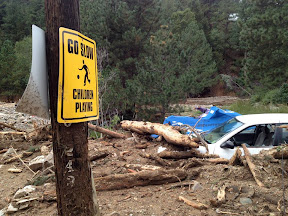
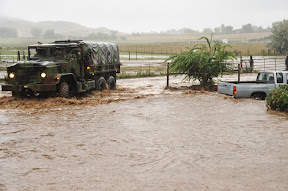
[pe2-image src=”http://lh3.ggpht.com/-s4FTglN9w8U/UjWvCPnJ1FI/AAAAAAAAAhU/VSkx7UO17jE/s144-c-o/006.jpg” href=”https://picasaweb.google.com/108306177534978229224/September2013ColoradoSFloods?authkey=Gv1sRgCOa7nK-5oPKyvQE#5923833337961108562″ caption=”South Platte River at 100th & McKay road breaching its banks and flowing into the Sprat Lakes on September 12, 2013. (Ed Dalton)” type=”image” alt=”006.jpg” pe2_single_image_size=”w300″ pe2_img_align=”right” ]
As we close the books on September 2013, the month featured its usual variety of weather but there is only one thing it will be remembered for: rain!
The month opened with temperatures well above normal. In fact, Denver recorded high temperature records three times in the first seven days.
Soon after however, the picture changed dramatically. The ridge that had kept us so warm at the start of the month moved east and low pressure remained over Nevada. This allowed a monsoonal-type flow of moisture to settle in and remain stubbornly in place for days on end.
Heavy rain became the rule starting on the 9th with showers persisting for six of the next seven days. Thornton and all of the Denver metro area recorded extraordinary amounts while areas closer to the foothills were absolutely pounded.
The ensuing floods were devastating for many places along rivers and streams. Thornton weathered the storm relatively well with some minor flooding. Other communities stretching from the foothills to the northeastern plains weren’t so lucky.
The month closed out with relatively typical September weather. Most days were mild but there were a few more showers and some colder temperatures as well.
In terms of temperatures, Thornton saw a monthly average of 64.3 degrees. This was almost a full degree warmer than the Denver long-term average of 63.4 degrees. The Mile High City, as measured at DIA, was as usual a good bit warmer with a September 2013 average of 66.4 degrees.
Neither location was warm enough to make it into the list of top 10 warmest Septembers. The number ten spot is 66.6 degrees.
We recorded 7 days with temperatures at or above 90 degrees. This matched the number Denver recorded.
Thornton saw a high monthly temperature of 99.0 degrees and a low of 33.2 degrees. Denver’s temperatures ranged from 97 degrees down to a low of 38 degrees.
Officially Denver recorded set or tied three record high temperatures:
- September 5, 97 degrees, tied record high last set in 1899.
- September 6, 97 degrees, breaks old record high of 95 degrees set in 1959.
- September 7, 95 degrees, tied record high last set in 1933.
Precipitation was of course the big story for the month and Thornton saw more rain in the month than we have ever recorded at ThorntonWeather.com since coming online in October 2006. By the time September came to a close, we had already bested our top year – with three months to go in 2013.
Thornton recorded a total of 10.15 inches of precipitation. The majority of that, 8.84 inches, fell between the 9th of the month and the 15th. One day, the 11th, dropped 4.76 inches in the rain bucket alone.
For Denver, we once again witnessed the problems with the official station being moved to Denver International Airport. While they did record an abnormally high amount, it lagged other areas closer to town, including at the old Stapleton site.
Denver’s records will show 5.61 inches, well above the September normal of 0.96 inches. That also is enough to put September 2013 into the history books as the wettest September in Denver history. The old record holder was September 1961 with 4.67 inches.
Three daily precipitation records were set at DIA:
- September 12, 1.11 inches, breaks old daily rain record of 0.95 inches set in 2012
- September 14, 2.01 inches, breaks old daily rain record of 0.61 inches set in 1912
- September 23, 0.64 inches, breaks old daily rain record of 0.52 inches set in 2000
No snow fell in September for the 13th year in a row. This ties the record for the longest snow-less September streak with the periods from 1914 through 1926 and from 1882 to 1894. The last time we saw September snow was in 2000 when 0.2” fell. The month averages 1.3 inches.
Click here to view Thornton’s September 2013 climate summary report.
Looking back – Top stories from the September 2013 floods
[pe2-image src=”http://lh3.ggpht.com/-mk2_HTFl7bI/UktlyYkmEQI/AAAAAAAAAwY/a56KaoOMF0Q/s144-c-o/Sept-Temps.jpg” href=”https://picasaweb.google.com/108306177534978229224/Misc?authkey=Gv1sRgCNPjmpm5l5PSOA#5929945250627195138″ caption=”Thornton, Colorado September 2013 temperatures.” type=”image” alt=”Sept-Temps.jpg” pe2_single_image_size=”w560″ pe2_img_align=”none” ]
[pe2-image src=”http://lh3.ggpht.com/-AEI7PqNjsFo/UktlyUJaioI/AAAAAAAAAwU/tglbcxtvlQo/s144-c-o/Sept-Precip.jpg” href=”https://picasaweb.google.com/108306177534978229224/Misc?authkey=Gv1sRgCNPjmpm5l5PSOA#5929945249439451778″ caption=”Thornton, Colorado September 2013 precipitation.” type=”image” alt=”Sept-Precip.jpg” pe2_single_image_size=”w560″ pe2_img_align=”none” ]
CLIMATE REPORT
NATIONAL WEATHER SERVICE BOULDER, CO
240 AM MDT TUE OCT 1 2013

......THE DENVER CO CLIMATE SUMMARY FOR THE MONTH OF SEPTEMBER 2013...

CLIMATE NORMAL PERIOD 1981 TO 2010
CLIMATE RECORD PERIOD 1872 TO 2013

WEATHER         OBSERVED          NORMAL  DEPART  LAST YEAR`S
                 VALUE   DATE(S)  VALUE   FROM    VALUE  DATE(S)
                                          NORMAL

TEMPERATURE (F)
RECORD
 HIGH              97   09/06/2013
                        09/05/2013
                        09/04/1995
 LOW               17   09/29/1985
HIGHEST            97R  09/06        97       0       95  09/01
                        09/05
LOWEST             38   09/28        17      21       45  09/28
                                                          09/22
AVG. MAXIMUM     78.6              78.5     0.1     80.3
AVG. MINIMUM     54.2              48.3     5.9     52.3
MEAN             66.4              63.4     3.0     66.3
DAYS MAX >= 90      7               3.4     3.6        7
DAYS MAX <= 32      0               0.0     0.0        0
DAYS MIN <= 32      0               0.8    -0.8        0
DAYS MIN <= 0       0               0.0     0.0        0

PRECIPITATION (INCHES)
RECORD
 MAXIMUM         4.67   1961
 MINIMUM            T   1892
                        1944

TOTALS           5.61R             0.96    4.65     2.95
DAILY AVG.       0.19              0.03    0.16     0.10
DAYS >= .01        10               6.5     3.5        5
DAYS >= .10        10               3.3     6.7        3
DAYS >= .50         3               0.6     2.4        3
DAYS >= 1.00        2               0.1     1.9        1
GREATEST
 24 HR. TOTAL    2.39   09/14 TO 09/15           09/25 TO 09/26
                                                          09/07 TO 09/07
                                                          09/07 TO 09/07
 STORM TOTAL       MM                                 MM
 (MM/DD(HH))            MM                    09/26(00) TO 09/26(00)
                                                 09/07(00) TO 09/07(00)7
                                                 09/07(00) TO 09/07(00)7

SNOWFALL (INCHES)
RECORDS
 TOTAL             MM   MM
TOTALS            0.0               1.3

DEGREE_DAYS
HEATING TOTAL      83               125     -42       69
 SINCE 7/1         83               141     -58       69
COOLING TOTAL     133                76      57      113
 SINCE 1/1        999               764     235     1235

FREEZE DATES
RECORD
 EARLIEST     09/08/1962
 LATEST       06/08/2007
EARLIEST                        10/07
LATEST                          05/05

WIND (MPH)
AVERAGE WIND SPEED              9.2
RESULTANT WIND SPEED/DIRECTION   2/183
HIGHEST WIND SPEED/DIRECTION    45/220    DATE  09/22
HIGHEST GUST SPEED/DIRECTION    64/220    DATE  09/22

SKY COVER
POSSIBLE SUNSHINE (PERCENT)   MM
AVERAGE SKY COVER           0.50
NUMBER OF DAYS FAIR            8
NUMBER OF DAYS PC             14
NUMBER OF DAYS CLOUDY          8

AVERAGE RH (PERCENT)     59

WEATHER CONDITIONS. NUMBER OF DAYS WITH
THUNDERSTORM              0     MIXED PRECIP               0
HEAVY RAIN                5     RAIN                       8
LIGHT RAIN               15     FREEZING RAIN              0
LT FREEZING RAIN          0     HAIL                       0
HEAVY SNOW                0     SNOW                       0
LIGHT SNOW                0     SLEET                      0
FOG                      12     FOG W/VIS <= 1/4 MILE      4
HAZE                      1

-  INDICATES NEGATIVE NUMBERS.
R  INDICATES RECORD WAS SET OR TIED.
MM INDICATES DATA IS MISSING.
T  INDICATES TRACE AMOUNT.

 With a Freeze Warning in place following yesterday’s cold front, we knew it was going to be cold and it certainly has been. In fact, it was record-setting.
 With the first full month of fall here, October usually brings one of the quietest weather months in the Denver area with plenty of mild, sunny days and clear, cool nights.