Weather warnings for northeastern Colorado. A Winter Storm Warning will go into effect for Thornton at midnight Thursday. (NWS)
Tomorrow is the last official day of winter and Mother Nature is set to ensure the season goes out like a lion. A major winter storm will arrive over Colorado tonight and bring bitter cold and significant snowfall to Denver.
The storm system we have been watching all week has begun to move down from the Pacific Northwest and will be joined with a cold front from the north. A scattered mix of rain and snow will kick things off to the north this evening before moving south along the Front Range. That will then transition to all snow after midnight at which point snowfall rates will begin to pick up.
Tomorrow’s rush hours are sure to become a miserable mess for commuters and drivers should exercise caution. Heavy snow is likely during the early morning hours and it will last throughout the daytime.
Snow accumulations of 6 to 12 inches is possible with the highest amounts to the west. Most of the Denver metro area will be looking at 5 to 9 inches total accumulation between tonight and Saturday morning. See the forecast snow total map below.
Image of Interstate 70's new alignment through Glenwood Canyon. Further repairs are needed to restore the highway completely. (CDOT) See a complete series of photos of the slide and repairs in the slideshow below.
Boulders the size of semi-trucks did significant damage to the interstate. A hole on the westbound sound measured 20 feet by 10 feet and one on the eastbound side was 6 feet by 6 feet.
Crews worked in recent days to remove one rock that was 20 feet in diameter and smaller threats on the mountain while others worked to repair the roadway below.
The extensive damage caused to the highway will result in limits on traffic through the affected area for the near future. Only one lane in each direction is open now and the speed limit has been reduced to 40 mph. Trucks over 14 feet wide are not permitted in the area.
CDOT said they would provide more information tomorrow as to how long complete repairs will take. In a statement they said the new restrictions “will remain like this until long-term repairs can be completed in the coming weeks/months.”
Slides in Glenwood Canyon are not entirely unusual due to the rugged terrain and the varying weather conditions experienced in the area. Storms, snow melt and runoff, and even minor seismic activity can set loose the sides of mountains.
The stretch of I-70 through Glenwood Canyon was the final piece of the interstate highway system to be completed in the United States. When it was finished in 1992 the 15-mile stretch was considered a major engineering accomplishment.
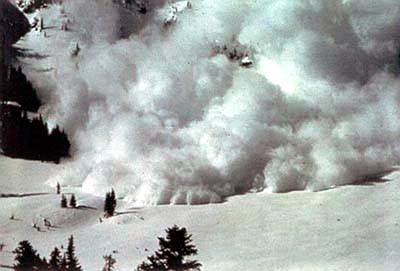
An avalanche near Loveland Pass killed a 20-year-old snowboarder on Wednesday. (File Photo - Wikipedia)
A group of three snowboarders west of Arapahoe Basin near Loveland Pass triggered an avalanche on Wednesday killing one of the men. 20-year-old Daniel Michelotti was killed when he was partially buried in the event.
According to Summit County Rescue Group, the three were snowboarding in a backcountry area off of Highway 6. Michelotti was in the lead of the trio when he triggered the avalanche. He was carried 1000 feet and nearly completely buried.
The two remaining friends used their snowboards to extricate Michelotti while they awaited search and rescue teams. None of the three carried standard avalanche preparedness gear such as a beacon, shovels or probes.
Summit County Rescue Group, and members of Arapahoe Basin Ski Patrol, Keystone Ski Patrol and the Summit County Ambulance Service all responded to the site.
Michelotti had moved to Colorado in November from Spring Grove, Illinois and was an employee of Breckenridge Ski Resort. The other two men were from Spring Grove as well, one of which arrived in Colorado two days prior.
The mountain snowpack has been very unstable for most of the winter. The Colorado Avalanche Information Center said the danger was ‘considerable’ for most of the central mountain areas including where Tuesday’s avalanche occurred.
Michelotti becomes the fourth fatality from avalanches this season. The most recent was on February 23rd when a man skiing in the backcountry as part of a group of eight was buried alive by and avalanche near Aspen.
Massive boulders lie strewn on Interstate 70 through Colorado's Glenwood Canyon Monday morning. (CDOT)
A rockslide that dropped boulders the size of semi-trucks has forced the Colorado Department of Transportation (CDOT) to close I-70 in both directions. Officials are unable to provide an estimate on when the road will reopen as damage is extensive on both east and west bound sides.
CDOT spokesperson Stacey Stegman said the boulders were big enough to punch holes into the surface of the highway. Some are large enough that moving them as they are may not be an option – they instead will have to be blown apart into smaller pieces.
CDOT reported on Twitter that the boulders ranged in size from 3 to 10 feet with the largest weighing 66 tons. The largest hole on the westbound side of the highway measures 20 feet by 10 feet and the largest on the eastbound side measures 6 feet by 6 feet.
The slide occurred near mile marker 125, west of Hanging Lake Tunnel. Officials said they were lucky the slide occurred at 12:09am when traffic on the highway was at a minimum.
Interstate 70 is closed in both directions between mile markers 116 and 133. CDOT says it could be a couple of days before traffic is able to utilize the route.
The shortest detour around the slide area is not a quick one requiring nearly a 200 mile route. Drivers are being encouraged to use U.S. 40 through Steamboat Springs or U.S. 50 through Montrose and Gunnison.
An avalanche near Aspen claimed the life of a backcountry skier on Tuesday. (File Photo - Wikimedia Commons)
The avalanche danger has been high throughout much of Colorado this year and that was highlighted today as rescuers pulled the body of a skier from a slide near Aspen. The victim is the third fatality of the season in Colorado.
Pitkin County Sheriff’s Department officials said the avalanche was triggered at 4:00pm on Tuesday in he Lindley Hut area and 911 received a call at about 6:00pm. The skier was part of a group of eight that supposedly had backcountry experience. Rescuers were on site this morning and pulled the victim out at about 9:00am.
Overall, the Colorado Avalanche Information Center (CAIC) said the avalanche danger was ‘considerable’ across much of the state. The center said that the danger is decreasing but “human triggered avalanches remain probable on steep mid and high elevation slopes.”
Dozens of incidents have been reported this season; two prior to yesterday’s were fatal. On January 6th the season turned deadly near Battle Mountain outside the Vail Ski Area when an out-of-bounds snowboarder died in an avalanche. The second fatality of the season occurred on February 11th in the Ridgway area in southwestern Colorado.
Heavy snow, in particular in the southwestern part of the state, has made conditions ripe for avalanches. Officials urge backcountry users to ensure they have appropriate gear with them and know the dangers of the area they are venturing. At a minimum, experts recommend all members of parties carry an emergency beacon, shovel and probe pole.
January 31 to February 6 - This week in Denver weather history
Winds can be a blessing and a curse this time of year. Chinook winds can help warm what is otherwise a normally chilly season. They can also cause a great deal of damage as they pick up speed as they come roaring across the Front Range. While we have been lucky thus far this year and not had damaging wind events, looking back at this week in Denver weather history one can’t help but think that maybe it is just a matter of time before they strike.
26-1
In 1888…a protracted warm spell lasted a week. Maximum temperatures ranged from 62 degrees on the 29th to an all time record high for the month of 76 degrees on the 27th. Daily record high temperatures of 76…69…and 71 occurred on the 27th…28th…and 30th respectively. Record high minimum temperatures of 47 and 34 occurred on the 26th and 27th.
27-31
In 1951…a major storm dumped 10.1 inches of snowfall at Stapleton Airport. Most of the snow…8.3 inches…fell on the 29th. Cold arctic air accompanied the snow. Several temperature records were set…including record low maximum temperatures of 4 on the 28th and 4 below zero on the 29th and record low temperatures of 12 below zero on the 29th and 24 below zero on the 31st. Temperatures were below zero for 45 consecutive hours.
29-31
In 1883…a major winter storm dumped 19.3 inches of snow on downtown Denver. Most of the snow…12.2 inches…fell on the 31st. This was the heaviest snowfall to hit the city in years. Temperatures plunged from a high of 52 degrees on the 29th to a low of 13 degrees on the 31st. Precipitation from the storm totaled 2.23 inches. The 1.22 inches of precipitation on the 31st was the greatest calendar day and 24 hour precipitation ever recorded in the city during the month of January.
30-31
In 1908…an apparent strong cold front plunged temperatures 45 degrees in 24 hours from 47 degrees at noon on the 30th to only 2 degrees at noon on the 31st. North winds were sustained to 30 mph on the 30th. Snowfall was only 0.8 inch on the 31st.
In 1965…a major storm dumped 10.4 inches of snow over metro Denver. After 5 inches of snow fell in Boulder… Strong Chinook winds developed…warming the temperature 25 degrees in 90 minutes. Wind gusts to 97 mph were recorded on Table Mountain in Boulder. Winds gusts to 53 mph were measured in downtown Boulder where some damage occurred. Minor wind damage also occurred in western suburbs of Denver. West winds gusted to 51 mph at Stapleton International Airport on the 31st.
In 2005…a winter storm brought heavy snow to the Front Range foothills. Storm totals included: 17 inches at Aspen Springs…13 inches 7 miles southwest of Boulder and at Lake Eldora…12.5 inches near Blackhawk…11.5 inches at Rollinsville and near Nederland…11 inches near Evergreen and Golden and at Gross Reservoir…and 10 inches at Cabin Creek. Lesser amounts of snow fell over the city. Only 1.9 inches of snow were measured overnight at Denver Stapleton. North winds gusted to 30 mph at Denver International Airport…where freezing fog during the early morning of the 30th reduced the surface visibility to as low as 1/8 mile. Light rainfall… Rare in January…totaled 0.06 inch at Denver Stapleton on the early morning of the 30th.
30-7
In 1985…a cold front on the 29th produced a protracted cold spell as arctic air remained entrenched across metro Denver. While the only daily temperature record set was a low maximum reading of 2 degrees on February 3rd…minimum temperatures plunged well below zero on 9 consecutive days. The coldest readings were 15 degrees below zero on January 31st and 14 degrees below zero on February 5th.
January 24 to January 30 - This week in Denver weather history
Denver and Colorado weather is rarely boring. This week in Denver weather history we see numerous occurrences of Chinook winds that warmed temperatures but also arrived with such force that they caused a great deal of damage. We also see unseasably warm weather, bitter Arctic cold, and snow fall that had to be measured in feet.
18-24
In 2005…a week of mid-winter unseasonably warm weather pushed high temperatures into the 60’s or more on all but one day. During the period…the highest temperature of 70 degrees on the 20th was a new record maximum for the date. Low temperatures remained above freezing on 4 of the days.
22-26
In 1948…the longest period of snowfall on record (92 hours and 3 minutes) occurred in downtown Denver where a total of 13.6 inches of snow fell. At Stapleton Airport…19.0 inches of snow fell…making it the heaviest snow in January and the 5th heaviest snow of record at that time. North winds were sustained to a velocity of 23 mph on the 25th…but generally the winds were light throughout the storm. The snow disrupted traffic…but street clearing was begun soon after it became apparent that the snow would be heavy. Over the 5 days…temperatures ranged from a high of 48 degrees on the 22nd to a low of 1 degree on the 26th. Most readings were in the teens and 20’s during the storm.
23-24
In 1921…heavy snowfall in downtown Denver totaled 8.0 inches overnight. Northwest winds were sustained to 22 mph with gusts to 25 mph on the 24th.
24
In 1887…west winds sustained to 44 mph warmed the temperature to a high of 56 degrees in the city.
In 1890…northwest winds sustained to 48 mph with gusts to 60 mph warmed the temperature to a high of 63 degrees.
In 1900…west winds were sustained to 44 mph with an extreme velocity of 46 mph. The Chinook winds warmed the temperature to a high of 57 degrees.
In 1934…a trace of snowfall resulted in precipitation of 0.01 inch in downtown Denver. This was the only measurable amount of precipitation for the month…making the month one of the driest January’s on record.
In 1956…west-northwest winds gusted to 51 mph at Stapleton Airport. Strong and gusty winds persisted throughout the day.
In 1972…a west wind gust to 92 mph was recorded in Boulder at the National Bureau of Standards…while in downtown Boulder a wind gust to only 66 mph was measured.
In Denver…a car was demolished when the wind blew a traffic light pole onto it…and a wooden wall at a construction site was blown over damaging two cars. Northwest winds gusted to 55 mph at Stapleton International Airport.
In 1982…strong winds were again reported along the eastern foothills. While the most damage occurred in the Fort Collins area…Boulder did not entirely escape. Nine planes were damaged at the Boulder airport along with 4 mobile homes and many cars in the Boulder area. A school in Central City was damaged. A water tank in Parker collapsed. The strongest wind gust recorded was 140 mph at Wondervu. Wind gusts reached 92 mph in Boulder. Northwest wind gusts to 61 mph were recorded at Stapleton International Airport.
In 1992…for the third day…high winds raked the eastern foothills. Winds gusted to 105 mph at the National Center for Atmospheric Research in Boulder. Several tractor trailers were overturned along State Highway 93…between Boulder and Golden. Traffic lights and signs were knocked down in Boulder. Other wind reports included: 86 mph at Rocky Flats…100 mph on Fritz Peak near Rollinsville…and 93 mph in north Boulder. West winds gusted to 37 mph at Stapleton International Airport.
January 17 to January 23 - This week in Denver weather history
Chinook winds in January oftentimes bring welcome warmth to the Front Range. They can however be more of a curse than a blessing as at times they can reach hurricane strength and do extensive damage. Looking back at this week in Denver weather history, we see many such occurrences.
14-21
In 1930…a protracted cold spell occurred when low temperatures plunged below zero on 8 consecutive days. The coldest low temperatures of 20 degrees below zero on the 17th and 19 degrees below zero on the 16th were record minimums for the dates. High temperatures during the period ranged from 18 on the 18th to zero on the 20th. Two degrees on the 15th was a record low maximum temperature for the date.
15-23
In 1962…a protracted cold spell kept metro Denver in the deep freeze for more than a week. From the 15th thru the 23rd…low temperatures were zero or below for 9 consecutive days…but a daily record low was set only on the 22nd when the temperature dipped to 14 degrees below zero. A record low maximum for the date was also set on the 22nd when the temperature climbed to only 11 degrees. The coldest high temperature was 3 degrees above zero on the 21st…which did not break the record. The protracted cold was broken for only a few hours on the afternoon of the 20th when Chinook winds warmed the temperature to a high of 38 degrees before another surge of cold arctic air plunged temperatures back into the deep freeze that evening. The severe cold caused much damage to water systems. A woman was frozen to death at Morrison. There were other deaths attributable to the weather…including traffic deaths and heart attacks from overexertion.
16-17
In 1886…a brief cold spell resulted in two temperature records. High temperatures of zero degrees on the 16th and 2 degrees below zero on the 17th were both record low maximums for the dates. Low temperatures of 8 degrees below zero on the 16th and 16 degrees below zero on the 17th were not records.
In 1930…temperatures plunging well below zero resulted in two records. Low temperatures of 19 degrees below zero on the 16th and 20 degrees below zero on the 17th were record low temperatures for the dates. High temperatures were 4 degrees on the 16th and 15 degrees on the 17th. Light snowfall totaled 4.0 inches. North winds were sustained to 18 mph on the 16th.
In 1964…high winds struck the eastern foothills. Gale velocity winds were recorded in Boulder with gusts to 83 mph measured at Rocky Flats. Several airplanes were damaged at the Jefferson County Airport in Broomfield. Roofs…walls…and parts of buildings were blown away at various locations. Power poles and trees were blown over.
16-18
In 1943…light snowfall totaled 3.2 inches over the 3 days. This was the only measurable snow of the month. North winds were sustained to 20 mph on the 16th.
January 10 to January 16 - This week in Denver weather history
January weather is like the weather of any other month in Denver in that you can see just about any type of condition possible. However, three conditions are dominant during the month – wind, snow and cold. All three make many appearances in our look back at this week in Denver weather history.
From the National Weather Service:
7-10
In 1962…a major winter storm dumped 13.5 inches of snow on metro Denver. A foot of the snow fell on the 8th when northeast winds gusted to 30 mph. The storm was followed by an intense blast of very cold arctic air. Minimum temperature readings of 24 degrees below zero occurred on both the 9th and 10th. The temperature never reached above zero on the 9th when a maximum reading of 1 degree below zero was recorded. Temperatures were below zero for 37 consecutive hours.
8-10
In 1983…winds of 70 to 90 mph howled through Boulder. A wind gust to 100 mph was recorded on Fritz Peak near Rollinsville. A tree blown down by the wind damaged a house in eastern Boulder County. The strong winds developed behind a cold front late on the 8th and continued through the 10th. At Stapleton International Airport…west to northwest winds gusted to 49 mph on the 8th…to 45 mph on the 9th…and to 48 mph on the 10th.
9-10
In 1962…the low temperature plunged to 24 degrees below zero on both days.
In 1972…a west wind gust to 60 mph was recorded at Stapleton International Airport…while in Boulder a wind gust to 86 mph was recorded at the National Bureau of Standards. The roof of a house was blown off…and trees were blown down in Boulder. The high winds contributed to the damage from a building fire in Boulder.
In 2000…heavy snow and strong winds in the mountains spilled into the Front Range foothills. Ward…northwest of Boulder…received 9 inches of new snow. Wind gusts to 91 mph were measured in Golden Gate Canyon…with gusts to 77 mph at Loveland Ski Area and to 73 mph along State Highway 93 north of Golden. West winds gusted to 44 mph at Denver International Airport on the 9th.
10
In 1893…strong west winds in Boulder and the adjacent foothills caused only minor damage.
In Denver…northwest winds were sustained to 48 mph with gusts as high as 60 mph. The Chinook winds warmed the temperature to a high of 64 degrees and a low of only 40 degrees…which was a record high minimum for the date.
In 1911…southwest Chinook winds sustained to 44 mph warmed the temperature to a high of 60 degrees.
In 1932…the first thunderstorm ever officially recorded in Denver during January occurred in the early morning. The assistant observer heard two prolonged peals of thunder between 4:20 am and 4:25 am. Another off-duty observer was awakened by the thunder. Other people reported both thunder and lightning. Light snow was falling at the time. Pellets of graupel or hail were reported from some parts of the city. Snowfall totaled only 1.8 inches. Northwest winds gusted to 30 mph.
In 1962…as the temperature dipped to a frigid 24 degrees below zero…setting a new record minimum for the date… The pressure adjusted to sea level reached the highest ever recorded in Denver…31.24 inches (1057.8 mb). The altimeter setting reached 30.70 inches…and the actual station pressure recorded was 25.260 inches.
In 1988…strong winds occurred throughout the day in and near the foothills. Peak gusts to 85 mph were recorded at Rollinsville…84 mph at Echo Lake…and 64 mph in Boulder.
In 1990…a third consecutive day of 50 to 85 mph wind gusts occurred in and along the eastern foothills. A 5 mile portion of the Denver-Boulder turnpike was closed after clouds of blowing dust and gravel caused several multicar accidents near Broomfield. One 59-year-old woman was killed and two others injured. A wind gust to 81 mph was recorded at the nearby Jefferson County Airport.
In Boulder…wind gusts to 85 mph were blamed for ripping off a portion of a roof on a house…as well as blowing out the large picture window. West winds gusted to 41 mph at Stapleton International Airport. The warm Chinook winds set a record high temperature of 71 degrees in Denver for the date.
In 1996…strong northwest winds developed behind a pacific cold front that moved rapidly across northeast Colorado. A peak wind gust to 64 mph was recorded at the Rocky Flats Environmental Test Facility in Jefferson County. North- northeast winds gusted to 38 mph at Denver International Airport.
January 3 to January 9 - This week in Denver weather history
January weather in Colorado can be as varied as during any month of the year. Temperatures bordering on spring-like to bone chilling Arctic cold can be seen. Snow of course plays a big part and while not always recognized as a big danger, high speed damaging winds are not unusual.
31-6
In 1973…the 31st marked the start of a protracted cold spell that extended into January of 1974 when temperatures dipped below zero on 7 consecutive days. Record daily minimum readings occurred on the 3rd and 5th when the temperature plunged to 17 degrees below zero on both days. A record low daily maximum temperature of only 4 degrees occurred on the 5th.
31-7
In 1941…a protracted cold spell through January 7…1942… Produced below zero low temperatures on 7 of the 8 days. A low temperature of 2 degrees on the 3rd prevented a string of 8 days below zero. The coldest days during the period were the 1st with a high of 2 degrees and a low of 9 degrees below zero…the 4th with a high of 2 degrees and a low of 11 degrees below zero…and the 5th with a high of 26 degrees and a low of 12 degrees below zero.
1-5
In 1940…the first days of the month were characterized by a mixture of drizzle…light snow…and fog. Fog occurred on each day. On the 4th and 5th considerable glazing resulted from freezing drizzle. All objects were coated with a glaze on the windward side. This resulted in very slippery streets…which caused several minor traffic accidents. The glaze was not heavy enough to damage wires and cables.
2-3
In 1971…a major storm dumped a total of 8.4 inches of snow at Stapleton International Airport where north winds gusted to 23 mph.
In 1972…a strong cold front late on the 2nd produced north wind gusts to 35 mph at Stapleton International Airport. Snow…heavy at times on the 3rd…totaled 6.4 inches as temperatures hovered only in the single digits.
In 2000…heavy snow fell over the higher terrain of the palmer divide to the south of metro Denver. Snowfall totaled 7 inches 5 miles southwest of Sedalia. Only 1.5 inches of snowfall were measured at the site of the former Stapleton International Airport.
2-4
In 1949…the worst blizzard in many years struck metro Denver and all of northern Colorado. The storm produced blizzard conditions with wind gusts of 40 to 50 mph all day on the 3rd when temperatures were only in the single digits. This resulted in extremely cold wind chill temperatures of 40 to 55 degrees below zero. Stapleton Airport received 13.3 inches of snow from the storm… While downtown Denver received 11.8 inches. The snow fell for 51 consecutive hours downtown. Numerous lives were lost…and livestock losses were high across the northeastern plains of Colorado where extensive airlift operations were needed to bring supplies and food to isolated communities.