All posts by Thornton Weather

ThorntonWeather.com is your local source for live Thornton, Colorado weather conditions and news!

Weather Underground website revamp pushes it ahead of other weather sources

Weather Underground website screenshot
The redesigned Weather Underground website is a great source for weather information. (WeatherUnderground.com)

Certainly for truly local, Thornton weather, ThorntonWeather.com is the place to go.  However you sometimes want a bigger picture or details on the weather for a different location and for that, a newly revamped Weather Underground website is the place to go.

We here at ThorntonWeather.com are big fans of the Weather Underground.  The site has always provided much greater depth and detail with more features than local media outlets and even more than the ‘big names’ like the Weather Channel.

Further, Weather Underground brings in the data from thousands of personal weather stations (PWS) like ThorntonWeather.com’s and uses those to provide local conditions to visitors – not airports miles away.  In return, Weather Underground allows PWS  owners to use their data freely, something which we do on ThorntonWeather.com and truly appreciate the reciprocity.

Where does ThorntonWeather.com use Weather Underground data?

We recently wrote about the newly redesigned Weather Underground site on Examiner.com and thought ThorntonWeather.com readers would like to learn more and add this resource to their bookmarks.   Continue reading Weather Underground website revamp pushes it ahead of other weather sources

With severe weather season approaching, National Weather Service schedules storm spotter training

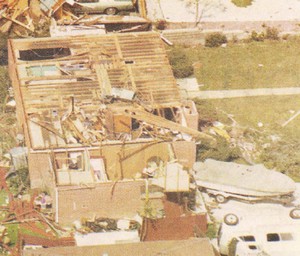
On June 3, 1981, Thornton was the site of the most destructive tornado in the history of the Denver metro area. The City of Thornton is now evaluating options to warn residents of severe weather threats. (City of Thornton archives)
On June 3, 1981, Thornton was the site of the most destructive tornado in the history of the Denver metro area. Storm spotter training gives you the education you need to keep you and your family safe. (City of Thornton archives)

Severe weather is a fact of life in Colorado – from blizzards to tornadoes we can and do see it all.  Each year the weather is responsible for claiming lives in our state and across the nation and the threat is very real.  Storm spotter training allows you to learn how to protect yourself and your family while providing a public service.

Education is key to knowing how to protect you and your family.  Whether you want to be an official storm spotter or maybe just want to learn more about severe weather, storm spotter training can provide you an incredible opportunity to learn.

The National Weather Service Denver / Boulder office has announced a series of storm spotter training dates for Colorado for the 2011 season.

The storm spotter program is a nationwide program with more than 280,000 trained spotters.  These volunteers report weather hazards to their local National Weather Service office providing vital information when severe strikes.  Data from spotters include severe wind, rain, snow measurements, thunderstorms and hail and of course tornadoes.

Storm spotters are part of the ranks of citizens who form the Nation’s first line of defense against severe weather. There can be no finer reward than to know that their efforts have given communities the precious gift of time–seconds and minutes that can help save lives.

By completing one of these training classes you can become an official storm spotter.  When severe weather strikes, you can report it by calling a special toll free number or submit your report via the National Weather Service’s website.

Continue reading With severe weather season approaching, National Weather Service schedules storm spotter training

February 20 to February 26 – This Week in Denver Weather History
February 20 to February 26 - This Week in Denver Weather History

This past week we have enjoyed spring-like weather and it is easy to forget we are still very much in winter.  Looking back at this week in Denver weather history we see that bitter cold and heavy snow are the alternatives that we can and have seen in our past.

From the National Weather Service:

18-20

In 1913…post-frontal snowfall totaled 6.9 inches in downtown Denver over the 3 days.  Most of the snow fell on the 19th. Northeast winds were sustained to 21 mph with a measured extreme velocity to 24 mph on the 18th.

In 1924…light snowfall totaled 4.6 inches over the 3 days. This was the only measurable snowfall of the month.  High temperatures plunged from 45 degrees on the 18th to 17 degrees on the 20th.  Low temperatures dipped from 31 degrees on the 18th to only 8 degrees on the 20th. Northeast winds were sustained to 24 mph on the 19th.

In 1953…a major blizzard dumped 10.6 inches of snowfall at Stapleton Airport.  Strong north winds at sustained speeds of 25 to 35 mph with gusts as high as 44 mph frequently reduced visibilities to 1/4 mile in blowing snow during the day of the 19th.  The strong winds caused much drifting snow…making accurate snowfall measurements almost impossible.  Precipitation from the storm totaled 1.13 inches.  The 1.01 inches of precipitation on the 19th was the greatest calendar day and 24 hour precipitation ever recorded in the city during the month of February.

In 1987…large amounts of new snow fell in the Front Range foothills.  The foothills received 10 to 20 inches of new snow with 4 to 8 inches on the adjacent plains.  On the 19th…flight delays occurred at Stapleton International Airport where snowfall totaled 4.2 inches and east winds gusted to only 18 mph on the 19th.  Schools were closed in the foothills above Boulder.

19-20

In 1924…4.6 inches of snow fell in downtown Denver.  This was the only measurable snow of the month.  Northeast winds were sustained to 24 mph on the 19th.

In 1937…post-frontal heavy snowfall totaled 8.4 inches over downtown Denver.  Most of the snow…6.6 inches…fell on the 20th when north winds were sustained to 16 mph with gusts to 18 mph.  The temperature dipped to a low of 9 degrees on the 20th.

In 1939…post-frontal snowfall totaled 5.4 inches in the city.  The snow covered streets and highways with a coating of ice as the temperature fell from 36 degrees at 2:00 pm on the 19th to a low of 4 degrees at 3:00 am on the 20th.  Many motorists were marooned for several hours.  Northeast winds were sustained to 24 mph on the 19th.

19-21

In 1971…heavy snowfall totaled 9.0 inches at Stapleton International Airport where north winds gusted to only 16 mph.  Most of the snow occurred on the 19th and 20th. The 24 hour snowfall of 8.2 inches was the greatest in February since 1953.

Continue reading February 20 to February 26 – This Week in Denver Weather History
Why our forecasts say “Washington’s Birthday” instead of “Presidents Day”

George Washington
Did you know there is no such holiday as "Presidents Day?" The holiday is technically titled "Washington's Birthday" per Section 6103 (a) of Title 5 of the United States Code.

You may have noticed that our forecasts leading up to Monday’s holiday say “Washington’s Birthday” instead of “Presidents Day.”  Why is that?  Because, believe it or not, there is no Federal holiday called Presidents Day.

You read that right.  If you don’t believe us, check out official calendar from the U.S. Office of Personnel Management.   As it turns out the third Monday of every February, while we commonly refer to it as Presidents Day, is by U.S. Code officially titled Washington’s Birthday.

The holiday began with an Act of Congress in 1880 and was for government offices in Washington DC.  It was expanded in 1885 to include all federal offices and was celebrated on George Washington’s actual birthday of February 22.

Then, in 1971 the Uniform Monday Holiday Act shifted the celebration to the third Monday of each February so now the date can range anywhere from the 15th to the 21st.  An early draft of that act would have renamed the holiday to Presidents Day but it failed in a Congressional committee in 1968.

So there you have it.  When someone says something about Monday’s holiday being Presidents Day, you can correct them and tell them there is no such holiday.

From the National Weather Service:

Q. Why did the National Weather Service (NWS) change its weather forecast references from Presidents Day to Washington’s Birthday in 2011?

A.  Weather forecast references were changed because the holiday is officially designated as “Washington’s Birthday” in Section 6103 (a) of Title 5 of the United States Code, which is the law that specifies holidays for Federal employees.  Although other institutions such as state and local governments and private businesses may use other names, it is NWS policy to refer to holidays by the names designated in the law.

Q. Wasn’t the holiday changed to Presidents Day when it was established by Congress to be observed on the third Monday in February?

A. No.  The effort to rename the holiday Presidents Day, intended to honor the birthdays of both Washington and Lincoln, failed in Congressional committee.  The bill, which was then signed into law on June 28, 1968, specified that the Federal holiday would retain the name Washington’s Birthday. The Uniform Monday Holiday Act of January 1, 1971, established its observance on the third Monday in February.

Q. What changes did the NWS implement to make this change?

A. The NWS changed the software on all its Internet web pages and at all local Weather Forecast Offices so that forecasts which include Washington’s Birthday will show the officially designated name for the holiday this year and into the future.

February 13 to February 19 – This Week in Denver Weather History

February 13 to February 19 - This Week in Denver Weather History

High winds and wintry weather highlight our look back at this week in Denver weather history.  Among the notable events is Denver’s longest continuous period of snow cover – 61 days – that occurred just four years ago.

From the National Weather Service:

10-13

In 1905…an extremely cold arctic air mass moved over the city behind a cold front on the 10th and persisted through the morning of the 13th.  North winds were sustained to 25 mph behind the front on the 10th dropping the temperature to a low of 2 degrees below zero…which was also the high reading on the 11th.  Light snowfall totaled 3.0 inches overnight of the 10th into the 11th.  The low temperature plunged to 19 degrees below zero on the 11th.  Records were set on the 12th and 13th.  The high temperature of only zero degrees on the 12th was a record low maximum for the date.  The low readings of 21 degrees below zero on the 12th and 14 degrees below zero on the 13th were record minimum temperatures for those dates.

11-13

In 1903…west to northwest Chinook winds gusting to 34 mph warmed the temperature to a high of 50 degrees on the 11th… Before temperatures rapidly plunged to a low of 14 degrees behind a cold front.  Light snow fell through the 13th and totaled 4.2 inches in the city…while temperatures ranged from a high of 14 degrees on the 12th to a low of 5 degrees below zero on the 13th.

12-13

In 1915…heavy snowfall totaled 7.0 inches over downtown Denver.  Northwest winds were sustained to 24 mph on the 13th.
 
In 1951…heavy snowfall totaled 8.1 inches at Stapleton Airport where northeast winds gusted to 28 mph on the 12th.
 
In 1968…snowfall totaled 5.6 inches at Stapleton International Airport where northeast winds gusted to 26 mph.  Snow fell all day on the 12th and into the morning hours of the 13th.
 
In 1997…heavy snow fell in the foothills southwest of Denver.  Conifer…Evergreen…Morrison…and north turkey creek received 6 to 8 inches of new snow overnight. Only 0.2 inch of snow fell at the site of the former Stapleton International Airport.  North-northeast winds gusted to 23 mph at Denver International Airport on the 13th.

13

In 1886…northwest winds were sustained to 40 mph during the early morning hours…but winds were strong and gusty all day.
 
Continue reading February 13 to February 19 – This Week in Denver Weather History
Satellite image shows a snow covered Colorado

February 10, 2011 - Satellite image of Colorado and surrounding states showing the extensive snow cover.
February 10, 2011 - Satellite image of Colorado and surrounding states showing the extensive snow cover. Click the image for a larger version. (NASA)

The recent snowstorm covered not only Thornton but the vast majority of Colorado in a blanket of white.  The latest satellite imagery from NASA shows the extent of the snow stretching across the state from border to border.

The satellite image, taken by NASA’s Aqua satellite on February 10th, shows the impressive snowfall received by the entire region.  Not only is Colorado covered but the neighboring states of Wyoming, Nebraska and Kansas are covered in snow as well.

Thornton received relatively little snowfall from the recent storm system but the temperatures were bitter cold.  Denver set a record low maximum temperature for February 8th, the second time since the first of the year that mark was set.

Click on the image to the right to view a larger image.

Denver ties temperature record for February 8th

Record Cold Temperatures
Denver tied a 78 year old record temperature for February 8th.

We of course knew it was cold yesterday but now we know exactly how cold.  At Denver International Airport the high temperature yesterday only climbed to 8 degrees.  This ties the record low maximum for the date last set in 1933.

Highlighting that is the fact that the “high” temperature occurred soon after midnight at 12:28am.  It was all downhill from there throughout the day as cold air settled in.  Daytime highs in Denver were only around 6 degrees.

Here in Thornton we virtually matched the official Denver high as we climbed to 8.3 degrees.  That occurred right at midnight.

February 6 to February 12 – This week in Denver weather history

February 6 to February 12 - This week in Denver weather history

Cold, snow and wind mark this week in our look back at Denver weather history.  Numerous notable events including a period of 69 hours when the temperatures remained below zero – the fourth longest on record.

30-7 

In 1985…a cold front on the 29th produced a protracted cold spell as arctic air remained entrenched across metro Denver. While the only daily temperature record set was a low maximum reading of 2 degrees on February 3rd…minimum temperatures plunged well below zero on 9 consecutive days. The coldest readings were 15 degrees below zero on January 31st and 14 degrees below zero on February 5th.

31-8 

In 1963…warm weather that began with the strong Chinook winds on the 31st and 1st continued through the 8th. Maximum temperatures through the period ranged from 52 degrees on the 2nd to 76 degrees on the 5th…which was a new record high for that date.

31-12

In 1899…a protracted cold spell lasted almost two weeks. Low temperatures plunged below zero on all days but February 9th with a reading of 6 degrees.  The coldest low temperature of 22 degrees below zero on February 6th was a record low for the date.  Low temperatures of 20 degrees below zero occurred on both February 11th and 12th… But only the 11th remains as the record minimum for the date.  High temperature of only 5 degrees below zero on February 11th was a record low maximum for the date.  High temperatures climbed to only zero degrees on both February 2nd and 3rd…but were not records.  Intermittent light snow or flurries fell during the period.  The most snowfall…2.0 inches…occurred on February 2nd.

Continue reading February 6 to February 12 – This week in Denver weather history

So how cold did it get in Thornton? Cold enough to freeze boiling water instantly

ThorntonWeather.com tested the theory that boiling water turns to ice crystals when thrown into sub-zero air.  It worked! Check out the video below. (ThorntonWeather.com)
ThorntonWeather.com tested the theory that boiling water turns to ice crystals when thrown into sub-zero air. It worked! Check out the video below. (ThorntonWeather.com)

To say it has been cold would be a major understatement.  Yesterday Denver’s “high” temperature only reached -2 degrees and this morning DIA dropped to -17 degrees, one degree shy of the record low temperature for the date.  We decided to have a little fun with the cold weather in our Thornton backyard yesterday. 

One fun experiment to do when the temperatures is so cold is to demonstrate how boiling hot water instantly freezes when thrown in the air.  We figured it would make a great story for our work on Examiner.com and thought we would share the results here.

Your intrepid local weather geek conducted the experiment at a time when the sun was partially shining but the temperature was a bone chilling 1.4 degrees below zero.  For what it is worth, with a 9 mph wind that was generating a wind chill of 14 degrees below! 

The experiment is conducted simply using a pot of boiling water.  When the water is taken outside in zero degree or colder weather and thrown into the air, the water instantly freezes in a cloud of ice crystals. 

It is interesting to note that if you do this with cold water, you simply end up dumping water everywhere – it doesn’t freeze!  That of course begs the question, how does boiling hot water freeze faster than cold water?

This phenomenon actually has a name – the Mpemba effect – named after Erasto Mpemba, a student in Tanzania in the 1960s who studied it.  While it is named after Mpemba, other luminaries including Aristotle spent time analyzing it.

Dr. Joe Larsen, a chemist at the Rockwell Science Center in Los Angeles, explains that the hot water breaks into tiny droplets when it is thrown because it is close to being steam.  The heat from the small droplets freezes virtually instantly resulting in the ice crystal cloud. 

This doesn’t happen with cold water because it is thicker and in a closer to solid state (or at least not as close to turning to evaporative gas as the boiling water is).  As such, it doesn’t break up as easily and falls to the ground in blobs. 

So, for those of you with kids at home because school is canceled, you can now put their time to good use by conducting a science experiment in the cold!

Flood weary Queensland, Australia struck by tropical cyclone

Category 5 Tropical Cyclone Yasi moves inland over flood ravaged Queensland, Australia.  Click the image to view more satellite photos on Examiner.com
Category 5 Tropical Cyclone Yasi moves inland over flood ravaged Queensland, Australia. Click the image to view more satellite photos on Examiner.com (CIMSS)

Devastating flooding over the past month and a half inundated hundreds of thousands of square miles in the Australian state of Queensland.  The last thing the weary residents needed was more stormy weather but that is what came in the form of Severe Tropical Cyclone Yasi. 

Just a few days ago Tropical Cyclone Anthony made landfall on Australia’s northeast coast.  Mercifully it was a relatively small storm.  The same cannot be said of Yasi.

Yasi landed at midnight local time on Thursday as a powerful Category 5 storm packing wind gusts to 186 mph.  Tens of thousands of residents fled the storm as it approached and reports of down trees, roofs ripped off homes and widespread power outages are being seen. 

As reported by the Natural Disasters Examiner:

“This is a cyclone of savagery and intensity,” warned Prime Minister Julia Gillard.  “People are facing some really dreadful hours in front of them.”

Accompanying the damaging wind was destructive storm surge more than six feet high that will likely submerge low lying coastal areas.  Rains from the storm are sure to drench ground already saturated from the massive flooding Queensland has seen in recent weeks and new flooding is likely.

The storm has moved inland and is near the town of Georgetown.  It still is packing powerful punch as a Category 3 cyclone with gusts in excess of 127 mph (205 kph).

Get the complete story on Examiner.com including a look at amazing satellite imagery of the storm as it struck.

Related: NOAA satellite imagery of the flooding in Australia (Examiner.com)