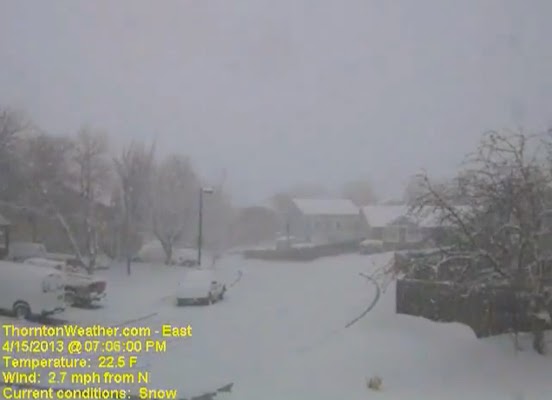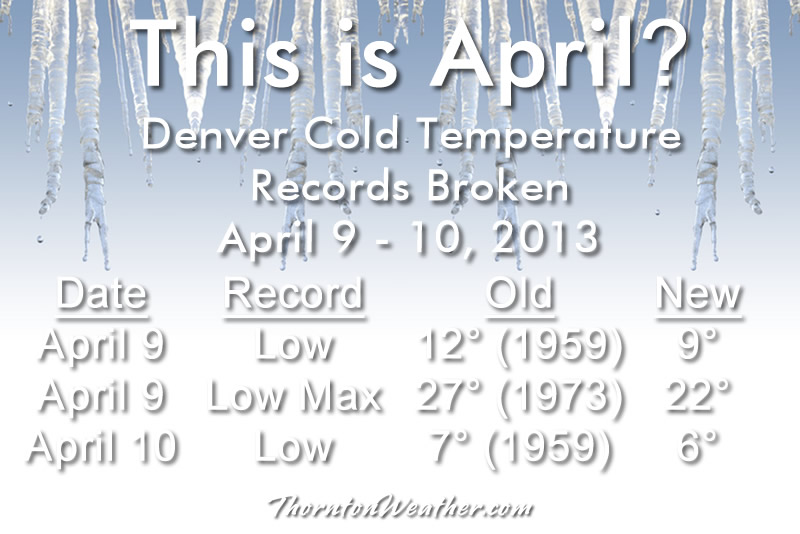
The first weekend of spring contained conditions in the Denver area not normally associated with that season as a powerful wintry storm pummeled northeastern Colorado. Snowfall totals were impressive as the Mile High City’s seasonal total…
Video captures fiery crash and pile-up as winter storm pounds Colorado
Not well-known to those outside the Mile High City, March is Denver’s snowiest month and Mother Nature is ensuring March 2013 lives up to that billing. A severe winter storm has struck northeastern Colorado forcing highway closures, one due to a fiery crash captured on video. Read the rest of this story and watch the video on Examiner.com.
Video: Denver’s late March snowstorm as seen from Thornton
The snow is falling, the wind is blowing and it is cold and nasty out there right now. We took to the street for a little bit to capture some video of our late spring snowstorm. Highlights include the flag flapping in the wind, blowing snow, shoveling and even an appearance by Scout, our Frisbee catching dog who doesn’t mind the snow one bit.
Update, 4:45pm: Below the first video taken this morning is a second video captured from our east facing webcam. It is a time lapse showing the past 24 hours compressed into 48 seconds.
- For the latest, please monitor our Winter Weather Briefing page. Also be sure to ‘like’ us on Facebook, follow us on Twitter and add us to your Google+ circles.
Live updates: Follow along for the latest with Thornton’s early spring snowstorm
It may be the first weekend of spring but Old Man Winter isn’t ready to give up yet. Another dose of wintry weather is said to deliver a good shot of snow and some pretty nasty, cold temperatures. We will be monitoring monitoring the storm very closely and posting regularly to our Facebook page and Twitter feed. You can follow along in real time below. We are also on Google+ here.
For comprehensive look at the storm, please monitor our Winter Weather Briefing page.
Early spring snowstorm pummels Denver and northeastern Colorado
Spring may have officially begun this week but Old Man Winter is hanging on and delivering a powerful punch to northeastern Colorado. A winter storm with heavy snow, strong winds and bitter cold serve as a reminder that March is Denver’s snowiest month. How much more can we expect? What are the impacts so far? Complete details in the story from the Denver Weather Examiner here.
First images from new Landsat satellite capture northern Colorado Front Range
For four decades Landsat satellites have beamed back amazing pictures of the Earth from their perch far above the planet’s surface. The latest craft in the series was launched last month and among the first images it captured were pictures of the area around Fort Collins and the Galena Fire burn scar.
The Landsat Data Continuity Mission took to space on February 11 to continue the joint program between NASA and the USGS. This latest spacecraft has some of the highest resolution imagery devices of any Earth-observing satellite and will allow the agencies to monitor the natural and human processes taking place on the planet.
This week NASA released some of the first images from the new craft including its ‘Image of the Day’ from the Earth Observatory program on Thursday. The photos capture the northern Colorado Front Range in natural color and one showing wavelengths of light not seen by the human eye. The city of Fort Collins is clearly seen as is the Galena Fire burn scar west of Horsetooth Reservoir.
Below the images are further explanation from NASA.


From NASA:
On March 18, 2013, the newly launched Landsat Data Continuity Mission (LDCM) began to send back images of Earth from both of its instruments—the Operational Land Imager (OLI) and the Thermal Infrared Sensor (TIRS). This view of Fort Collins, Colorado, is among the satellite’s first images.
The images above are close-up views from the OLI sensor at its maximum resolution of 15 meters per pixel. The top image displays natural color, while the second image blends shortwave infrared, near-infrared, and green wavelengths (LDCM bands 7, 5, 3). The close-ups were cropped from larger Landsat scenes (downloadable beneath each web image) that show where the Great Plains meet the Front Range of the Rocky Mountains in Wyoming and Colorado.
“The first OLI and TIRS images look great right out of the box,” said Jim Irons, LDCM project scientist. “I have waited a long time to view the first LDCM images and I could not be more impressed with their appearance.”
Made with reflected red, green, and blue light, the top image shows Fort Collins as the human eye would see it. The city is a gray grid surrounded by the curving roads and brown yards of residential neighborhoods. White clouds cast black shadows on the ground below. Land freshly burned in the Galena fire is charcoal black—just slightly darker than the dark green coniferous forest to its west.
The second image shows Fort Collins in wavelengths of light not usually visible to people. Plants are green, city areas are purple, snow is pale blue, and bare earth is tan-pink. This combination of visible and infrared light reveals features of the landscape not otherwise visible. For example, irrigated parks, yards, and golf courses are bright green in this image, but brown in natural color. The Galena Fire burn scar is dark red and easy to distinguish from its surroundings.
The Landsat Data Continuity Mission was launched on February 11, 2013, to continue the four-decade-long Landsat record of Earth’s landscapes. LDCM represents an evolutionary advancement in technology from previous Landsat sensors, collecting more data daily and with greater fidelity. The imagers also include two new bands to improve the view of clouds and near-shore waters.
LDCM’s normal operations are scheduled to begin in late May 2013, after the instruments have been calibrated and the spacecraft has been fully checked out. At that time, NASA will hand over control of the satellite to the U.S. Geological Survey, and the satellite will be renamed Landsat 8.
Read more about LDCM and its imagery in the NASA story: A Closer Look at LDCM’s First Scene.
Image captures the start of spring as seen from space
Spring officially began this morning at 5:02am MDT. It is during this time, the vernal equinox, that the Earth’s axis is not tilted toward or away from the Sun. As a result equal amounts of the Sun’s light are directed to the Northern and Southern Hemispheres.
Soon after the event this morning one of NOAA’s GOES satellites captured the light on the face of the planet in near perfect equilibrium.

From NOAA:
Mar 20, 2013
GOES Satellite Captures Spring Equinox
It is that time of year again (it happens twice) when the relative angle of Earth is perpendicular to the Sun, causing equal incoming solar energy to the Northern and Southern hemispheres – as well as equal day and nighttime. At 7:02 ET on March 20, 2013, Earth was at its equinox. At 7:45 ET, the GOES-13 satellite captured this full disk image of Earth. The visible imagery sensor on GOES requires sunlight to “see” clouds, and so it provides a useful example of the equinox. In this image the GOES imagery extends to each of the poles since the entire hemisphere is equally lit. After the equinox passes today, the Northern Hemisphere will be more lit than the Southern Hemisphere – causing the seasons. (Note: the Sun in this image is artificially created, though the GOES spacecraft does have sensors continually monitoring the Sun for solar activity.)
March 17 to March 23: This Week in Denver Weather History

March weather can be gorgeous but it can also be nasty with a healthy dose of any of the four seasons. Our look back at this week highlights this with a number of notable weather events from powerful, damaging winds to landspout tornadoes and of course monstrous snow storms.
From the National Weather Service:
9-19
In 1906…an extended cold and blustery period occurred with light snow totaling 14.4 inches over 11 consecutive days. The greatest amount of snow on a single day was 4.0 inches on the 15th. Only a trace of snow fell on the 12th and 17th. High temperatures were below freezing for the entire period. The coldest were 14 degrees on the 16th and 18 degrees on the 17th. Both readings were record low maximums for the dates. Low temperatures were mostly in the single digits. The coldest were 2 degrees below zero on the 16th and 5 degrees below zero on the 19th. Northeast winds were sustained to 22 mph on the 9th. North winds were sustained to 36 mph on the 10th…32 mph on the 13th…and 22 mph on the 15th.
17
In 1966…high winds caused extensive minor damage across metro Denver. A light plane was overturned at Stapleton International Airport where northwest wind gusts to 55 mph were recorded. Winds gusted to 56 mph at Table Mesa in Boulder
In 1989…strong winds raked metro Denver. West wind gusts to 49 mph were clocked at Stapleton International Airport.
In 2003…the first tornado of the season was sighted near Strasburg. The small landspout touched down briefly…but caused no damage.
17-18
In 1923…4.2 inches of snow fell over downtown Denver. Northwest winds were sustained to 45 mph with gusts to 49 on the 17th. Low temperature of zero degrees on the 18th was the lowest of the month that year.
In 1944…heavy snow fell across metro Denver. The storm started as rain on the 17th…but soon turned to snow. Snowfall amounts totaled 8.5 inches in downtown Denver and 11.0 inches at Stapleton Airport. The highest wind recorded during the storm was 23 mph on the 17th.
In 1961…a major winter storm dumped 10.7 inches of snow at Stapleton Airport. Most of the snow…9.7 inches…fell on the 18th. Winds were light.
In 1994…strong winds buffeted metro Denver. West winds gusted to 51 mph at Stapleton International Airport on the 17th. Other significant wind gusts included 85 mph atop Squaw Mountain south of Idaho Springs…and 82 mph at Rollinsville southwest of Boulder…both on the 18th.
In 1996…a second storm in less than 3 days dumped heavy snow in the mountains and foothills again…but snowfall amounts across metro Denver ranged from only 2 to 4 inches. The heavy snowfall resulted in several traffic accidents along I-25 and I-70…south and west of Denver respectively. The major accidents involved at least 30 cars and resulted in several minor injuries. The accidents closed both highways for a time. Snowfall totals included 13 inches at Evergreen and 10 inches at Conifer. Snowfall totaled only 0.7 inch at the site of the former Stapleton International Airport. At Denver International Airport… North winds gusted to 28 mph on the 17th and 39 mph on the 18th.
17-19
In 1933…rain changed to snow on the evening of the 17th and continued through mid-day of the 19th. Snowfall totaled 5.6 inches with 0.83 inch of precipitation in in the city. North winds were sustained to 38 mph with gusts to 46 mph on the 18th and to 30 mph with gusts to 43 mph on the 19th.
In 2003…one of the worst blizzards since historic records began in 1872 struck metro Denver with a vengeance. Heavy wet snow accumulating to around 3 feet in the city and to more than 7 feet in the foothills brought transportation to a near standstill. North winds sustained to 30 mph with gusts as high as 41 mph produced drifts to 6 feet in the city. The estimated cost of property damage alone…not including large commercial buildings…was 93 million dollars… Making it the costliest snowstorm ever. Mayor Wellington Webb of Denver said…”this is the storm of the century…a backbreaker…a record breaker…a roof breaker.” Two people died in Aurora from heart attacks after shoveling the heavy wet snow. The National Guard sent 40 soldiers and 20 heavy duty vehicles to rescue stranded travelers along I-70 east of Gun Club Road. The heavy wet snow caused roofs of homes and businesses to collapse. The snow also downed trees… Branches…and power lines. Two people were injured when the roofs of their homes collapsed. In Denver alone…at least 258 structures were damaged. In Arvada…a roof collapse at west gate stables killed a horse. Up to 135 thousand people lost power during the storm…and it took several days for power to be restored in some areas. Denver International Airport was closed…stranding about 4000 travelers. The weight of the heavy snow caused a 40-foot gash in a portion of the tent roof…forcing the evacuation of that section of the main terminal building. Avalanches in the mountains and foothills closed many roads…including I-70…stranding hundreds of skiers and travelers. Along I-70…an avalanche released by the Colorado department of transportation…blocked the interstate in both directions for several hours. Several residences between Bakerville and Silver Plume were evacuated because of the high avalanche danger. At Eldora Ski Area…270 skiers were stranded when an avalanche closed the main access road. After the storm ended…a military helicopter had to ferry food to the resort until the road could be cleared. The heavy snow trapped thousands of residents in their foothills homes in Jefferson County for several days. Two homes burned to the ground when fire crews could not reach the residences. Some schools remained closed well into the following week. The storm officially dumped 31.8 inches of snow at the site of the former Stapleton International Airport…the most snowfall from a single storm since the all-time record snowfall of 37.5 inches on December 4-5…1913. The storm made March 2003 the snowiest March on record…the 4th snowiest month on record… And the 5th wettest March on record. The 22.9 inches of snow on the 18th into the 19th was the greatest 24 hour snowfall ever recorded in the city during the month of March. The storm was also a drought-buster…breaking 19 consecutive months of below normal precipitation in the city. Snowfall across metro Denver ranged from 2 feet to more than 3 feet. The highest amounts included: 40 inches in Aurora…38 inches in centennial and 6 miles east of Parker…37 inches at Buckley AFB…35 inches in southwest Denver…34 inches in Louisville… 32 inches in Arvada…31 inches in Broomfield and Westminster… And 22.5 inches in Boulder. In the foothills…snowfall ranged from 3 feet to more than 7 feet. Some of the most impressive storm totals included: 87.5 inches atop Fritz Peak and in Rollinsville…83 inches at cabin creek…74 inches near Bergen Park…73 inches northwest of Evergreen…72 inches in Coal Creek Canyon…70 inches at Georgetown…63 inches near Jamestown…60 inches near Blackhawk…55 inches at Eldora Ski Area…54 inches 8 miles west of Sedalia…and 46.6 inches at Ken Caryl Ranch. The storm was the result of a very moist…intense slow moving pacific system which tracked across the four corners and into southeastern Colorado…which allowed deep easterly upslope flow to form along the Front Range.
18
In 1883…0.3 inch of snow fell in downtown Denver. This was the only measurable snowfall of the month.
In 1903…rain changed to sleet and then to snow…which became heavy. Post-frontal snowfall totaled 7.0 inches over the city. North winds were sustained to 51 mph with gusts as high as 60 mph.
In 1905…northwest winds were sustained to 42 mph.
In 1914…northeast winds were sustained to 46 mph with gusts to 56 mph behind a strong cold front. Snowfall was 3.4 inches over the city…but most of the snow melted as it fell. The estimated amount of melted snow was 8.1 inches.
In 1920…a terrific windstorm occurred along the eastern foothills. Two deaths were attributed to the storm and some damage occurred. Both Denver and Boulder were affected by the strong winds. West winds were sustained to 51 mph with gusts as high as 66 mph in downtown Denver. The strong winds did considerable damage to property… Wires…plate glass windows…and indirectly loss by fire. The wind caused the death of one young girl by toppling the side of a brick building on her as she was standing on a corner waiting for a car. The wind was also responsible for several severe auto accidents due to blowing debris into the streets and blowing dust and dirt into the eyes of drivers.
In 1954…west winds at sustained speeds of 40 mph and gusts as high as 56 mph produced some blowing dust at Stapleton Airport.
In 1979…heavy snow totaled 4 to 12 inches along the Front Range from Denver north. I-25 was closed for a brief time between Denver and Cheyenne. New snowfall totaled 4.3 inches at Stapleton International Airport where north winds gusted to 29 mph.
In 1998…a major winter storm dumped heavy snow over areas west from I-25 to the continental divide as strong upslope conditions developed. Two to 3 1/2 feet of snow fell in the foothills with 1 to 2 feet reported in west metro Denver. Snowfall totals included: 38 inches at Silver Spruce Ranch…2 miles south of Ward; 35 inches at Aspen Springs; 33 inches near Blackhawk; 30 inches at Eldora; 29 inches in Coal Creek Canyon; 27 inches at Conifer… Chief Hosa…and Nederland; 25 inches at Rollinsville and Gross Reservoir; 21 inches at Evergreen; and 15 to 19 inches at Broomfield…Lakewood…and Table Mesa in Boulder. Elsewhere across metro Denver…snowfall ranged from 8 to 14 inches. Snowfall totaled only 7.9 inches at the site of the former Stapleton International Airport. East winds gusted to 31 mph at Denver International Airport.
Continue reading March 17 to March 23: This Week in Denver Weather History
March 10 to March 16: This Week in Denver Weather History

Heavy, wet snow is the hallmark of March in Denver and we see many events containing just that in our look back at this week in Denver weather history.
From the National Weather Service:
8-10
In 1989…unusually warm weather set four daily temperature records in Denver. The high temperature of 74 degrees on the 8th exceeded the record. Records were equaled on the 9th with a high of 77 degrees and the 10th with a high of 79 degrees. The low temperature of 42 degrees on the 10th set a new record high minimum for the date.
9-10
In 1904…strong Chinook winds raked the city for 2 days. On the 9th…west winds sustained to 53 mph with gusts to 62 mph warmed the temperature to a high of 55 degrees. On the 10th… West winds were sustained to 48 mph with gusts to 54 mph. The high temperature was 58 degrees.
9-11
In 1927…rain changed to heavy snow behind a cold front and totaled 7.7 inches over downtown Denver. North winds were sustained to 37 mph with an extreme velocity to 38 mph on the 11th.
In 1955…a strong windstorm raked the eastern foothills. A wind gust to 95 mph was recorded at Rocky Flats with a gust to 60 mph measured at Valmont. Damage in Boulder totaled 10 thousand dollars. Minor injuries also occurred. The strong winds were associated with a vigorous cold front that produced northwest winds at 40 mph with gusts as high as 52 mph at Stapleton Airport where the visibility was briefly reduced to 3/4 mile in blowing dust on the 10th.
In 1968…5.5 inches of snow fell at Stapleton International Airport where northeast winds gusted to 24 mph on the 10th.
9-19
In 1906…an extended cold and blustery period occurred with light snow totaling 14.4 inches over 11 consecutive days. The greatest amount of snow on a single day was 4.0 inches on the 15th. Only a trace of snow fell on the 12th and 17th. High temperatures were below freezing for the entire period. The coldest were 14 degrees on the 16th and 18 degrees on the 17th. Both readings were record low maximums for the dates. Low temperatures were mostly in the single digits. The coldest were 2 degrees below zero on the 16th and 5 degrees below zero on the 19th. Northeast winds were sustained to 22 mph on the 9th. North winds were sustained to 36 mph on the 10th…32 mph on the 13th…and 22 mph on the 15th.
10
In 1893…northwest winds were sustained to 48 mph with gusts to 60 mph in the city.
In 1948…the high temperature warmed to only 6 degrees… The all-time record low maximum for the month of March. The same reading also occurred on March 6…1920.
In 1970…5.0 inches of snow fell at Stapleton International Airport where north winds gusted to 21 mph.
Continue reading March 10 to March 16: This Week in Denver Weather History
Storm recap: Late winter storm brings much needed precipitation

Perhaps we could call it the ‘Daylight Savings Storm of 2013’ or some other lame name like the Weather Channel uses. Then again, we will stick with simply calling yesterday’s snowstorm a late winter storm that brought much-needed precipitation.
Leading up to yesterday’s storm all indicators were there for a significant shot of snow. Forecasts varied a bit from outlet to outlet and some were disappointed that we didn’t receive as much as some forecasts said. However within range with our forecasts for Thornton.
Snow began falling during the 4:00am hour on Saturday, March 9 and would continue for nearly 12 hours. It was the first six hours that the most accumulation was recorded. After that relatively warm temperatures and warm ground melted the snow as fast – and faster – than it was falling.
The one benefit of the fast melting is that Denver metro area roads never really became all that bad. The story was quite different on the plains to the east where blowing snow prompted the closure of Interstate 70 for 24 hours or so. Denver International Airport (DIA) did have more than 600 flights cancelled.
At its highest we recorded 5.6 inches of snow on the ground. More than that certainly fell but the melting was taking its toll. This brings Thornton’s seasonal snowfall total to 34.5 inches.
Officially Denver recorded 5.4 inches as measured at Denver International Airport. The Mile High City’s seasonal total is now at 38.5 inches.
Best of all the heavy, wet snow contained a great deal of liquid precipitation. Thornton saw 0.48 inch of precipitation and Denver 0.27 inch. As parched as our landscape has been this winter this is very welcome.
Below is a time lapse video from our east webcam of the storm from start to finish – 14 hours in 28 seconds. Scroll down below that for an interactive map of snowfall totals from across northeastern Colorado.