
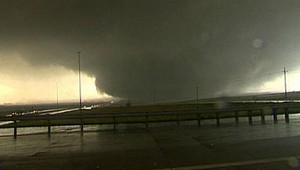
One fact that may surprise those new to Colorado is that we are actually on the western edge of the infamous Tornado Alley. This large swath of land comprises much of the nation’s midsection and is a unique place as the United States sees more tornadoes than any other place on earth. In fact, tornadoes have been recorded in all 50 states including Alaska and Hawaii.
Closer to home, Colorado sees our share of these storms. In fact, one metro area county – Weld County – holds the distinction of being the “tornado capital of the world.” With 252 tornados from 1950-2011, no single county in the nation has had more tornadoes! Adams County is number two in the state and isn’t far behind with 156 over that same period. Granted these numbers are skewed a bit simply due to the sheer size of those counties, but it does serve to highlight the real danger that tornadoes present.
Even here in the metro area tornadoes are a real danger. The Thornton area was struck in 1981, one of the worst tornadoes to strike the Denver area in history. At 2:30 p.m. this tornado touched down and by 2:45 p.m., the tornado had hit Thornton City Hall. The tornado’s destruction sent 53 injured people to hospitals, 25 homes were destroyed and 239 structures were damaged.
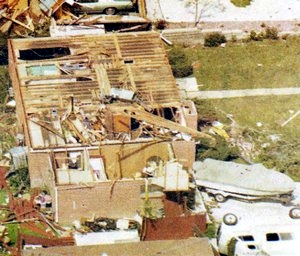
The most well known tornado outbreak in the metro area occurred on June 15, 1988. Five tornadoes resulted in seven injuries and damage in excess of $15 million.
We all of course also remember in 2008 when the town of Windsor, not far from Denver, was struck with an EF-3 tornado that claimed one life and destroyed and damaged hundreds of buildings.
The greatest threat for tornadoes occurs during late spring and early summer when you have a combination of heat and moisture in the lower atmosphere. Here in Colorado, tornadoes are frequent from May through August with June being the most active month.
However, there is no hard and fast rule for when tornadoes strike, as Colorado witnessed on March 29, 2007 when Holly, Colorado was struck by an EF-3 tornado with winds of 165 mph. Two women lost their lives as a result of that event and 160 homes were damaged.
Colorado ranks 10th in terms of the number of tornadoes with 1,911 events from 1950-2011. One good thing is that our high altitude and drier air do make it harder for the monster supercells that spawn the biggest tornadoes to form. Most of our tornadoes are small and short lived. Further, thanks to the wide open spaces of the eastern half of our state, many strike sparsely populated areas. This is reflected in the fact that we rank 38th for tornado related deaths.
Most tornadoes are not powerful enough to cause widespread damage – most are weak and according to the National Weather Service, 89 percent have a life span of less than 10 minutes and result in less than 5 percent of tornado fatalities. These weaker tornadoes typically have wind speeds less than 110mph which will damage a wood frame construction home but may completely destroy a mobile home or outbuilding.
Of the 10 percent of tornadoes that are considered strong, some may last 20 minutes or more and cover distances in excess of 20 miles. These major tornadoes can have speeds to 165mph, account for 30 percent of tornado deaths and will cause considerable damage to almost any type of structure.
The remaining 1 percent of tornadoes are considered violent in nature and result in 70 percent of tornado fatalities. They simply destroy everything in their paths, can last more than an hour and travel more than 50 miles. The only chance for survival in a violent tornado is inside a safe roof or underground shelter.
Tornado Safety
With the severe weather season upon us, it is wise to have a plan of action should a tornado threat arise. Think about what you will do whether at school, at home, at work or outdoors. Get in, get down and cover up. That is the quick and easy rule to remember. Get inside a sturdy structure, get to the lowest floor or an interior room, and cover your head.A well-built structure with a basement or underground storm shelter is the safest place to be. If a basement isn’t available, move to a small interior room like a closet or bathroom. More people are injured by flying debris from tornadoes than anything so that is why you need to cover up with a blanket or get under a piece of heavy furniture.
Modular homes, no matter how well anchored, provide little or no shelter from a tornado. Most tornado fatalities occur in mobile / modular homes. If you find yourself in one of these when the threat is announced, immediately seek shelter in a more sturdy building or storm shelter.
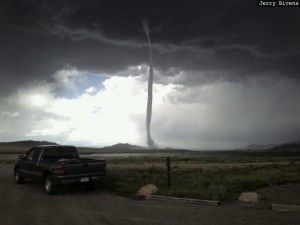
When driving in open country and you see a tornado, simply drive away from the path of the tornado – usually at a 90 degree angle to the path is best. While we all have seen video of people doing it, do not seek shelter beneath a highway underpass as these act like wind tunnels and actually serve to increase the wind speed and collect flying debris. In the extreme situation that you simply cannot get away from a tornado, abandon your vehicle immediately. Lie down in a ditch or culvert and cover your head. This isn’t a particularly good option, but it is safer than remaining in a vehicle.
Two old and outdated pieces of advice still seem to linger although they have been disproved. One states to open all the windows in your home so as to “equalize the pressure.” This in fact does nothing to protect your property and studies show it may actually cause more damage. The second bad piece of advice says to hide in the southwest corner of a basement with the theory being tornadoes move from the southwest to the northeast thus you will minimize your exposure. This erroneously assumes all tornadoes move in the same direction and that simply isn’t the case.
In the end, you simply need to be aware of what is going on around you. If the skies look threatening, it is better to be safe than sorry.
Below is a video of a tornado near Campo, Colorado on May 31, 2010. Had this struck a populated area, the results would likely have been deadly.
National Weather Service Statement for Severe Weather Awareness Week
PUBLIC INFORMATION STATEMENT
NATIONAL WEATHER SERVICE BOULDER CO
ISSUED BY NATIONAL WEATHER SERVICE GOODLAND KS
600 AM MDT TUE APR 12 2022
Tornadoes and Tornado Safety
This is Colorado Severe Weather Awareness Week, a time when the National Weather Service reminds you of the hazards associated with thunderstorms. Today’s topic is tornadoes.
Colorado is no stranger to tornadoes. In fact, 14 years ago on May 22nd, 2008, a powerful tornado, rated an EF-3 on the Enhanced Fujita scale, moved through portions of northern Colorado. The tornado cut through Windsor, CO on its 39 mile path, leaving behind a path of destruction, at least 78 injuries, and one fatality. Damage estimates exceeded $100,000,000 from this tornado.
While large tornadoes are not as common along the Colorado Front Range as they are across the Eastern Plains, they are possible given the right conditions. The location was not the only oddity with this significant tornado; the tornado moved from southeast to northwest. Only a small minority of all tornadoes move northwest. Also, the tornado formed just before noon, well before the usual time frame when tornadoes are most common. Tornadoes typically form during the afternoon to early evening hours across Colorado.
The tornado threat in Colorado increases rapidly in May and continues through August. Ninety percent of Colorado tornadoes occur during this four month period, but tornadoes have been reported as early as February and as late as November.
Tornadoes have occurred in most areas of the state, but historically 95% of tornadoes occur along and east of Interstate 25 where heat and moisture in the lower atmosphere are often more abundant. Tornadoes can occur at every hour of the day, but most occur between 1pm and 8pm.
Across the country, about 90% of tornadoes are considered weak with winds less than 110 mph. About 10% of tornadoes are considered strong with winds up to 165 mph. Strong tornadoes are responsible for nearly 30 percent of tornado deaths. Violent tornadoes account for only 1% of all tornadoes, but they result in nearly 70 percent of all tornado fatalities because they destroy much of what is in their path.
An easy phrase to remember for tornado safety is to Get In, Get Down, and Cover Up. Get inside a sturdy building, get down to the lowest floor or most interior room, and cover your head.
The best option for tornado safety is to be inside a well-built structure within a basement, safe room or underground storm shelter. If none of these options are available, move to a hallway or a small interior room on the lowest floor such as a closet or bathroom. A room without windows is best. Cover yourself with blankets or get under a sturdy piece of furniture because the greatest risk of injury from tornadoes is from flying debris and structural collapse.
Abandon modular homes and mobile homes as they offer little to no protection from tornadoes. Most tornadoes can destroy even tied-down mobile homes. Approximately 50 percent of all tornado fatalities are the result of people sheltering in a mobile home. If a tornado approaches, seek safety in a nearby building or storm shelter. A neighbor or family member’s house, a community storm shelter, or other local buildings all provide better shelter. Remember to get out!
If you are driving in open country and see a tornado, do not try to outrun a tornado as tornadoes can move up to 60 miles per hour. Instead, simply drive away from the tornado path at a right angle if time permits. Do not take shelter beneath a highway overpass.
If a tornado is fast approaching with little time to react, pull over into a ditch. Either remain buckled in your vehicle while crouching down below window level, or abandon your vehicle and lie down in a low area away from your vehicle and protect your head. If you are caught outside and cannot find a safe shelter, crawl into a culvert or lie down in a narrow ditch and cover your head. Remember these are poor, last-minute options; the worst place to be when a tornado threatens is outside in the midst of flying debris. Heavy rain can also produce flash flooding, putting you in further danger when taking shelter in a culvert or ditch.
You can get the latest weather forecasts and severe weather watches and warnings from a local NOAA All-Hazards Weather Radio station, your local radio or TV stations, your cell phones, and on the Internet at weather.gov.
For more complete information on tornadoes and tornado safety visit http://weather.gov/boulder. In the news headlines section, click on the Colorado Severe Weather Awareness web link and choose the Tuesday statement.
If a tornado threatens your location, remember to get in, get down, and cover up!
This is part two of a five part series on Colorado’s severe weather.
There are still occurrences that cannot be halted by advanced technology. Just like weather disturbances such as thunderstorms, hail, tsunami, and even the destructive tornadoes. Awareness is the best practice to save lives when these disasters occur. Establishing sturdy tornado shelters could be an effective way to safety.