Our look back this week in Denver weather history highlights why being prepared for winter weather is so crucial. From massive winter storms to damaging wind and deadly exposure to the elements, we have seen each in the past.
From the National Weather Service:
25-27
In 1897…a major storm dumped 13.5 inches of snowfall over downtown Denver. Rain changed to snow during the evening of the 25th and continued through mid-morning of the 27th. Most of the snow…12.0 inches…fell on the 26th when north winds were sustained to 36 mph and gusts were as high as 46 mph. Temperatures during the storm were in the 20’s and lower 30’s. Precipitation (rain and melted snow) totaled 1.21 inches.
In 2021…the minimum temperature at Denver International Airport dropped into the single digits for three consecutive mornings: 8 degrees…4 degrees and 8 degrees respectively.
26-27
In 1971…strong winds raked Boulder. At the National Bureau of Standards wind gusts to 62 mph were recorded…while in downtown Boulder winds peaked to 48 mph. At Stapleton International Airport…northwest winds gusted to 38 mph on the 26th and north winds gusted to 36 mph on the 27th.
In 1976…the first measurable snow of the season turned into a major storm. Traffic was halted for several hours on highways to the west of Denver where 8 to 12 inches of snow fell in the foothills. Snowfall totaled 7.2 inches at Stapleton International Airport where north winds gusted to 30 mph. Most of the snow…6.3 inches…fell all day on the 26th. The greatest snow depth on the ground was 5 inches on the morning of the 27th.
27
In 1980…the first snowfall of the season totaled only 1.5 inches with 0.10 inch of moisture at Stapleton International Airport where the maximum snow depth on the ground was only 1 inch due to melting. This was the only measurable precipitation of the month…making it the driest October since 1962 when only 0.03 inch of precipitation was measured.
In 1994…wind gusts to 70 mph were recorded atop Squaw Mountain…5 miles south of Idaho Springs…and at Rollinsville in the foothills southwest of Boulder. Northwest winds gusted to 28 mph at Stapleton International Airport.
27-28
In 1874…strong west winds in Boulder along with a reported tornado produced 150 dollars in damage.
In 1913…a strong cold front produced sustained northeast winds to 35 mph with gusts as high as 38 mph on the 27th. Overnight snowfall totaled 5.8 inches. Temperatures plunged to a low of 17 degrees on the morning of the 28th after a high of 60 degrees on the 27th.
27-30
In 2009…a powerful early season storm brought heavy snow to the Front Range. The combination of a deep northeasterly upslope flow coupled with abundant moisture and lift with the developing storm system produced an extended period of moderate to heavy snowfall. The heavy wet snow accumulated on trees and resulted in broken branches and scattered electrical outages. Interstates 70 and 76 were closed east of Denver. Numerous other roads and highways were shut down. The Red Cross set up numerous emergency shelters for stranded travelers. The blowing snow at Denver International Airport forced the cancellation of hundreds of flights. Schools were also closed. In the foothills storm totals included: 46 inches… 3 miles southeast of Pinecliffe; 42 inches…3 miles southwest of Conifer; 34 inches…3 miles north of Blackhawk; 30 inches at Aspen Springs and near Evergreen… 23 inches at Roxborough Park…and 20 inches…3 miles south-southeast of Morrison. Across the urban corridor storm totals included: 25 inches in Highlands Ranch; 21.5 inches near Louisville…20.5 inches in Broomfield… 20 inches at Lafayette…17.5 inches in Boulder…17 inches in Westminster…16.5 inches in Erie; 15.5 inches in Arvada and 5 miles west-northwest of Littleton…15 inches in Littleton…14 inches in Englewood…13.5 inches in Lakewood and 6 miles north of Thornton; 13.3 inches at Denver International Airport…11 inches…4 miles south of Denver; 10.5 inches…2 miles north of cherry hills village and Niwot.
28
In 1917…post-frontal snowfall totaled 6.5 inches in the city. North winds sustained to 30 mph with gusts to 33 mph caused the temperature to plunge from a high of 58 degrees to a low of 9 degrees by midnight.
In 1967…winds gusted to 65 mph in downtown Boulder…causing minor damage. South winds gusted to 32 mph at Stapleton International Airport.
In 1991…the first major snow of the season hit metro Denver as a cold arctic air mass moved over the area. Snowfall amounts across northeast Colorado ranged from 3 to 10 inches with 4.4 inches of snowfall recorded at Stapleton International Airport where north winds gusted to 22 mph. The low temperature dipped to 13 degrees.
In 1993…high winds buffeted the Front Range foothills. A wind gust to 83 mph was recorded atop Squaw Mountain…35 miles west of Denver…and a gust to 76 mph occurred near Rollinsville southwest of Boulder.
28-29
In 1993…an upper level disturbance combined with a moist upslope flow to bring heavy snow to portions of metro Denver. Snowfall amounts ranged from 5.4 inches at Stapleton International Airport to 14 inches in Boulder. New snowfall totaled 8 inches at Gross Reservoir in the foothills 5 miles southwest of Boulder. On the 28th…north winds gusted to 30 mph at Stapleton International Airport where the temperature climbed to only 25 degrees on the 29th…equaling the record low maximum for the date.
28-30
In 1971…a vigorous cold front plunged temperatures from a high of 70 degrees on the 27th to record low levels on the 29th and 30th. Snowfall totaled 3.1 inches at Stapleton International Airport where north winds gusted to 23 mph. Some freezing drizzle also fell on the 28th. Record daily low maximum temperatures of 32 degrees on the 28th and 25 degrees on the 29th were established along with a daily record minimum of 13 degrees on the 30th.
Continue reading October 27 to November 2: This Week in Denver Weather History
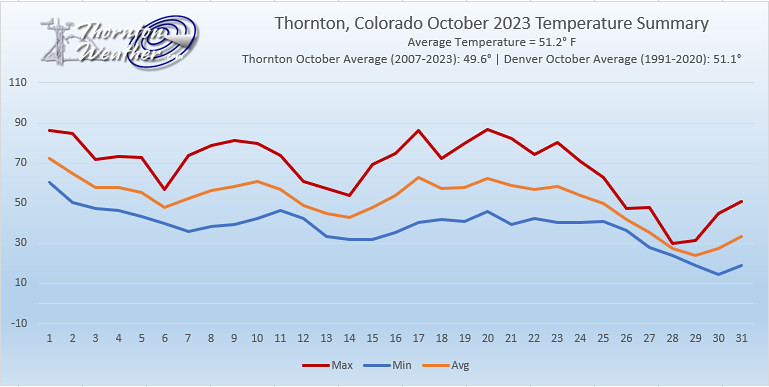
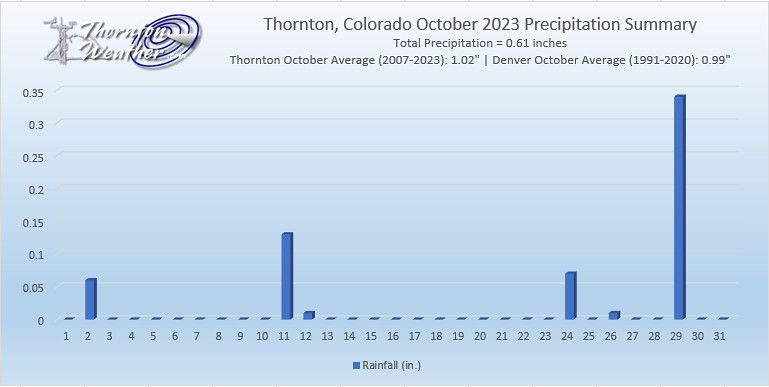
 With the first full month of fall here, October usually brings one of the quietest weather months in the Denver area with plenty of mild, sunny days and clear, cool nights.