There are many notable events on our look back at the weather history books for this week but one in particular stands out. It was 30 years ago this week, on June 3, that the infamous Thornton tornado struck. This twister still stands as the most damaging tornado to have ever struck the Denver metro area.
26-31
In 1995…a cool period with light morning showers and moderate to heavy afternoon showers and thunderstorms pushed rivers already swollen from mountain snow melt over their banks causing minor flooding. Streams and rivers such as the South Platte and Boulder creek flooded meadowlands…bike paths…roads near streams…and other low lying areas. No significant property damage was reported and crop damage was unknown. Rainfall totaled 1.79 inches at the site of the former Stapleton International Airport and only 1.51 inches at Denver International Airport.
29
In 1934…the low temperature dipped to only 66 degrees…the all-time record highest minimum temperature for the month of May.
In 1958…a microburst caused a brief wind gust to 56 mph at Stapleton Airport.
In 1964…heavy rain caused flooding in the Harvey Gulch area of southeast Denver. The high water damaged homes… Businesses…streets…and bridges. At Stapleton International Airport…1.33 inches of rain were measured with 1.76 inches total rainfall on the 29th and 30th. The heavy rain during the last week of the month was the first significant precipitation since April 3rd.
In 1967…3/4 to 1 inch diameter hail stones fell in the city of Denver…but caused no reported damage. Hail as large as 3/4 inch was measured at Stapleton International Airport.
In 1975…the heaviest last snowfall of the season occurred when 5.6 inches of snow were measured at Stapleton International Airport. Rain all day on the 28th changed to snow on the 29th and accumulated to a depth of 4 inches on the ground. Northwest winds gusted to 31 mph. Precipitation (rain and melted snow) on the 28th and 29th totaled 1.48 inches.
In 1982…one man was killed and two others injured by a lightning strike as they stood under a tree in the city of Denver’s Washington Park.
In 1987…7/8 inch diameter hail fell near Castle Rock.
In 1990…thunderstorms over metro Denver produced several small funnel clouds and two small tornadoes. The first tornado (f0) touched down in northwest Denver and caused roof damage to a house and snapped off the tops of several trees. A second tornado (f1) touched down in Northglenn and moved into Thornton damaging a group of self storage garages…several vehicles…a wooden fence…several trees… And the roof of an auto parts store. No injuries were reported. The storms also caused minor street flooding across northern and western sections of metro Denver. Rainfall totals ranged from 1 to 3 inches. Lightning started a small fire at a home in northwest Denver. The fire was confined to the front rooms and was quickly extinguished. Snow plows were used to clear 2 to 4 inches of pea to marble size hail from a stretch of U.S. Highway 285 in Turkey Creek Canyon. Lightning felled a tree in northeast Denver…while strong winds snapped off several large tree limbs in the same area. Thunderstorm rainfall totaled 0.82 inch at Stapleton International Airport where southwest winds gusted to 30 mph.
In 1991…lightning struck a 13 year old boy in a field in Fort Lupton. The boy was in critical condition in an area hospital for 2 days before recovering.
In 1995…lightning struck a soccer goal post and injured 6 adults viewing a soccer game in Arvada. Although no one received a direct hit from the lightning…all escaped with only minor injuries…except one woman who was hospitalized.
In 1996…large hail…3/4 to 1 1/2 inches in diameter… Struck Lakewood and west Denver. Lightning sparked a small fire when it struck an oil storage tank 5 miles west of Brighton.
In 2001…lightning sparked a fire in an apartment complex in Aurora…forcing the evacuation of 24 units. Most of the fire damage was confined to the attic. Damage was estimated at 100 thousand dollars.
In 2004…a man and his son were struck by lightning while practicing on the driving range at the Meadows Golf Club in southwest metro Denver. The father was killed by the bolt…and his 16 year old son seriously injured. Three other people standing nearby received only minor injuries.
In 2010…hail up to 7/8 inch in diameter was reported in Broomfield.
29-1
In 1894…heavy rain combined with snowmelt runoff caused widespread flooding over the South Platte River basin. Rainfall was heaviest in the foothills where 5 to 8 inches were measured over the 4 days. Heavy rainfall west of Boulder flooded mining towns and damaged mining properties. In the canyons above Boulder…railroads and roads were washed out along with many bridges. The floodwaters spread into central Boulder and covered a wide area from University Hill north to near Mapleton Hill to a maximum depth of 8 feet. Many houses were swept away…and every bridge in Boulder was destroyed. A few people…trapped in their homes by the floodwaters… Had to be rescued. However…the gradual rise of the flood waters resulted in only one death. Boulder creek spread to a width of nearly one mile in the pasture land to the east of Boulder. Extensive flooding on left hand creek north of Boulder washed away railroad and wagon bridges. The heavy cloudbursts caused flooding on bear creek…which washed away bridges…railroad tracks…and structures and destroyed the canyon roadway. Morrison sustained the heaviest flood damage on bear creek. In Denver…rainfall totaled only 1.50 inches on the 30th and 31st…but the heavy rainfall on upstream tributaries of the South Platte River caused the river to rise as much as 10 feet above the low water mark in the city…which caused some flooding of pasture land downstream to a depth of 6 feet near Brighton.
30
In 1875…a windstorm lasting almost all day produced sustained winds to 42 mph.
In 1935…southeast winds sustained to 29 mph with gusts to 34 mph produced a moderate duststorm during the afternoon.
In 1938…heavy thunderstorm rain and hail pummeled downtown Denver during the evening hours. Rainfall accumulated to 1.63 inches. Hail accumulated to a depth of 18 inches.
In 1948…a localized thunderstorm caused flooding on sand creek in Aurora and northeast Denver. Rainfall was only 0.49 inch in downtown Denver where light hail also fell.
In 1963…a golfer died of injuries received when struck by lightning on a golf course southwest of Denver. A warehouse in Denver was damaged and its contents destroyed by a lightning-caused fire.
In 1967…up to 4.00 inches of rain in Lakewood and wheat ridge caused flooding of roads and basements. Water was several feet deep in some yards. Many streets were temporarily closed. Hail as large as 1 inch in diameter fell in Wheat Ridge. Hail piled up to 2 feet deep in some low lying areas of east and southeast Denver. Snowplows were employed to remove the hail. Stapleton International Airport…where west winds gusted to 39 mph…received 1.51 inches of rain and hail…which forced the closure of the runways for an hour. Hail stones to 3/4 inch in diameter were measured at Buckley Field. A funnel cloud was sighted near south Wadsworth Blvd and Bear Creek. A tornado touched down briefly in the vicinity of 60th and 62nd avenues near north Washington Street. The storm uprooted trees and damaged one building. Doors were ripped from a business house…widely scattering irrigation pipe. In addition…a total of 3 funnel clouds were sighted in that area.
In 1970…hail up to 1 inch in diameter fell at Stapleton International Airport.
In 1976…a single thunderstorm crossed south metro Denver producing a funnel cloud 2 miles south of Arapahoe road and Broadway. The storm moved over Buckley Field producing a funnel cloud and 1/2 inch diameter hail. As the storm moved northeast of the city…a large tornado touched down near east 59th Ave and tower road and was on the ground for 20 minutes. It demolished a 60-foot-long cinderblock cow shed…tore a wall from a machinery shed…tore shingles off the roof of a farmhouse nearby…and felled 12 trees on one farm. A boy in a feed shed 20 feet from a destroyed building was not injured.
In 1977…3/4 to 1 inch diameter hail fell at or near Stapleton International Airport. One inch to baseball size hail fell in south Denver…damaging some homes and extensively damaging some airplanes at Arapahoe County airport…now centennial airport. Hail covered highways to a depth of 6 to 8 inches in south Denver.
In 1978…two funnel clouds were sighted 5 miles south of Stapleton International Airport. Hail up to 1 1/4 inches in diameter was reported in wheat ridge and northwest Denver. Only 1/2 inch diameter hail fell at Stapleton International Airport.
In 1989…golf ball size hail fell at the junction of I-25 and I-225. One inch diameter hail fell in Littleton.
In 1990…a line of severe thunderstorms crossed metro Denver… Producing wind gusts to 60 mph and scattered areas of pea to marble size hail. Small trees and branches were blown down by the strong thunderstorm winds…which also caused minor power outages across southern and eastern sections of metro Denver. The strong winds uprooted a 25- to 30-foot tree in the acres green subdivision of northern Douglas County. The tree blocked a busy street for several hours. A pilot reported hail as large as 1 1/2 inches in diameter covering the ground near the north end of a runway at Stapleton International Airport. Heavy rain caused a rock and mud slide that partially closed the Boulder canyon highway 10 miles west of Boulder. Thunderstorm winds gusted to 41 mph at Stapleton International Airport.
In 2001…lightning ignited a fire which destroyed a luxury home on bear mountain near Evergreen. Estimated damage was set at 1 million dollars.
In 2003…flash flooding occurred in the Hayman Fire burn area after as much as 1 inch of rain fell in 30 minutes. The heavy rainfall washed out many access roads and closed State Highway 67 between Deckers and west creek. A 3-foot wall of water ran down Fourmile Creek from the YMCA camp at Shady Brook…damaging one building in the camp and flooding roads. Hail as large as 3/4 inch in diameter fell near Roggen in weld County.
In 2005…lightning struck as least 20 homes in Westminster. Only minor damage was reported. Severe thunderstorms produced hail as large as 1.25 inches in and near Fort Lupton and hail to 3/4 inch near Indian Hills in Jefferson County.
In 2014…heavy rainfall…nearly 1.2 inches in 30 minutes… produced localized street flooding in Boulder. The heavy rain coupled with the already swollen creeks from the spring runoff along Boulder Creek resulted in the flooding. Street flooding was reported at 6th St and Canyon Blvd and at Baseline Road. Some cars were stranded in the high water in low lying areas and one person reported being trapped in his vehicle.
30-31
In 1935…heavy thunderstorm rains overnight caused flash flooding east of the city on both Kiowa and Bijou Creeks… Resulting in a total of 9 deaths. Most of the damage was on Kiowa Creek where there were more structures. The water rose rapidly during the storm…ripping houses and stores from their foundations and sweeping them downstream. Precipitation in Denver totaled only 0.01 inch. Hail fell in the city for a short time. The hail was very small and caused no damage.
In 1983…a late storm of rain and snow hit the Front Range. Over an inch of rain fell at some spots…and above 7 thousand feet…1 to 5 inches of snow whitened the ground. Some snowflakes even fell in the western suburbs of metro Denver on the night of the 30th.
In 2002…unseasonably warm weather at the end of the month resulted in 3 temperature records. High temperature of 91 degrees on the 30th equaled the record maximum for the date. Low temperature of 61 degrees on the 31st was a record high minimum for the date. High temperature of 93 degrees on the 31st was a record maximum for the date.
Continue reading May 29 to June 4: This week in Denver weather history
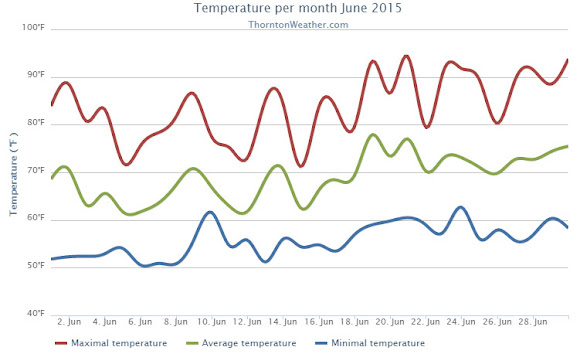
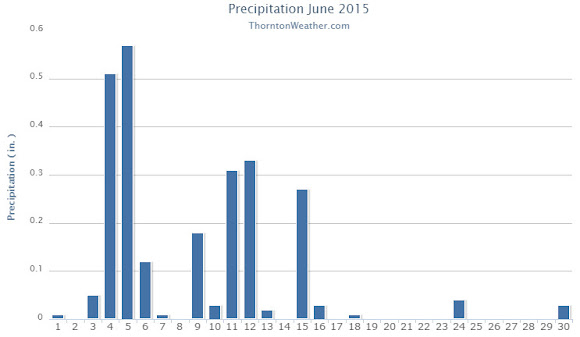

 Extreme weather can occur during in month in Colorado we well know. June however is when traditional spring severe weather arrives in the state oftentimes with hail, damaging wind and tornadoes.