We will be out of the office for a few days while we disconnect and recharge. Be sure to visit the website regularly for the latest forecasts, radar, current conditions and more. See you soon!

We will be out of the office for a few days while we disconnect and recharge. Be sure to visit the website regularly for the latest forecasts, radar, current conditions and more. See you soon!
Another high temperature record in the books for summer 2021.
As measured at Denver International Airport, the Mile High City’s temperature topped out at 100 degrees today. This easily bests the record high for the date of 98 degrees set 145 years ago in 1876.
Here in Thornton, we matched the 100 degree mark. This was our fifth 100+ degree day of the year in Thornton, more than any other year in the past 15 since Thornton Weather came online.
R & R! That is what in our forecast for a while. 😉 Until we return, please continue to use our website for the latest weather conditions, radar, forecasts and more.

Change is of course the one constant in Denver’s weather but come July, things actually get pretty consistent.
The standard formula for a day in July is a sunny morning, clouds developing in the late morning and early afternoon. Come mid-afternoon, thunderstorms are rolling off of the foothills and into the metro area and the eastern plains. These storms do occasionally reach severe status containing hail, gusty winds and heavy downpours of rain.
Check out our July weather preview for a complete look at what is in store for the month ahead.

The month of June typically sees springtime severe weather reach its height of activity in northeastern Colorado.
This affords the opportunity to capture extraordinary images of amazing weather phenomena from monstrous supercell thunderstorms to heavy rain, hail and even tornadoes.
Showcasing images captured by ThorntonWeather.com readers as well as some of our own, our monthly slideshow covers the entire gamut of weather and nature related imagery.
Sunsets, sunrises, wildlife and of course every type of weather condition are vividly depicted. June brings some very dynamic weather and the photos are a great way to see the stunning variety.
To learn more about how to send your photo to us for inclusion in the slideshow, see below the slideshow.
| [flickr_set id=”72157719376583098″] |
What is missing in the slideshow above? Your photo!
Our monthly photo slideshow is going to feature images that we have taken but more importantly images that you have captured. The photos can be of anything even remotely weather-related.
Landscapes, current conditions, wildlife, pets, kids. Whimsical, newsy, artsy. Taken at the zoo, some other area attraction, a local park, a national park or your backyard. You name it, we want to see and share it!
Images can be taken in Thornton, Denver or anywhere across the extraordinary Centennial State. We’ll even take some from out of state if we can tie it to Colorado somehow.
We’ll keep the criteria very open to interpretation with just about any image eligible to be shown in our slideshows.
What do you win for having your image in our slideshow? We are just a ‘mom and pop’ outfit and make no money from our site so we really don’t have the means to provide prizes. However you will have our undying gratitude and the satisfaction that your images are shared on the most popular website in Thornton.
To share you images with us and get them included in the slideshow just email them to us or share them with ThorntonWeather.com on any of the various social media outlets. Links are provided below.
So come on, get those camera’s rolling!
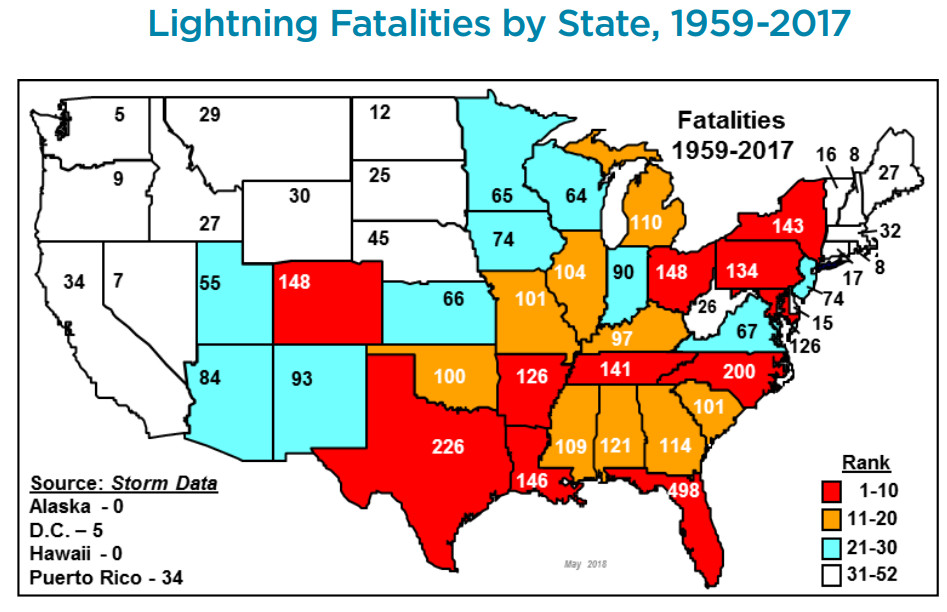
Colorado has the rather unenviable distinction of ranking fourth in the United States for lightning-related fatalities. During the spring and summer the nice weather finds many residents outside and while clear skies are the norm, storms oftentimes loom and present a very real hazard to residents.
From the National Weather Service:
PUBLIC INFORMATION STATEMENT
NATIONAL WEATHER SERVICE PUEBLO CO
600 AM MDT MON JUN 21 2021
Colorado Lightning Safety Awareness Week continues through Saturday. Today we discuss the lightning threat across the Centennial State.
In the United States, there are an estimated 25 million cloud-to-ground lightning flashes per year, and each one is a potential threat to both life and property. During the past thirty years, 44 people have been killed each year by lightning on average, while during the last ten years this number is 27. Last year, 16 people were killed by lightning, while many others were injured. All of the people who were killed by lightning in 2017 were involved in outdoor activities.
In Colorado last year, lightning killed 2 people and injured 2. During the past thirty seven years, on average, Colorado has had 3 lightning fatalities and 12 injuries per year.
Since 1980, El Paso County, including the Colorado Springs metro area, has had the dubious distinction of having the most lightning casualties, with 10 fatalities and 84 injuries. Larimer County has had 10 fatalities and 75 injuries, while Jefferson County has had 9 fatalities and 38 injuries.
Because it usually affects one or two victims at a time, and does not cause the destruction left in the wake of tornadoes or hurricanes, lightning generally receives less attention.
Many people do not act in a timely manner to protect their lives, and the lives of others, simply because they do not understand all the dangers associated with thunderstorms and lightning.
You need to become aware of the situations that put you at a greater risk of being struck by lightning, and what you can do to reduce that risk. While nearly all people take some protective actions when rain, hail and wind are occurring with thunderstorms, many leave themselves vulnerable to being struck by lightning as thunderstorms approach, move overhead and move away.
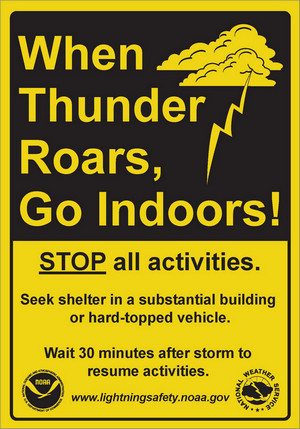
Lightning can strike more than 10 miles from the rain area of a thunderstorm. That distance is about as far as you can hear thunder. If you can hear thunder, you could be in danger of being struck by lightning. When Thunder Roars, Go Indoors!
Most lightning deaths and injuries in Colorado occur during the afternoon when lightning is most likely to develop, and when people are more likely to be outside. Quite a few lightning fatalities occur when little or no rain is falling.
The chance that you will be struck by lightning in the United States is about 1 in 960 thousand for each year of your life. However, your chance of being struck will depend on whether you consistently practice all the lightning safety rules.
Lightning starts around half of the forest and rangeland wildfires across the state. Colorado averages around 2500 wildfires each year. Many of these lightning caused fires occur with very little or no rain. These storms often generate gusty winds, which can fan the flames of the fire.
During this Lightning Safety Awareness Week, the National Weather Service will provide a variety of information on lightning in Colorado.
On Tuesday, the science of lightning will be discussed.
On Wednesday, the topic of the day is outdoor lightning risk reduction. On Thursday, we will have information on indoor lightning safety.
On Friday, information for lightning strike survivors will be provided. On Saturday, lightning and wildfire information will be available.
When planning outdoor activities, check out the hazardous weather outlook and the latest forecast, which include thunderstorm and lightning potential. Make sure you get the specific forecast information of the location you will be visiting. The web sites for National Weather Service offices which cover Colorado and issue these products are…
Denver/Boulder…www.weather.gov/den Grand Junction….www.weather.gov/gjt Pueblo……………www.weather.gov/pub Goodland…………www.weather.gov/gld
NOAA’s lightning website which contains abundant information on lightning safety can be found at:
www.lightningsafety.noaa.gov
Lightning information specific for the State of Colorado can be found at: www.weather.gov/pub/lightning
The lightning topic for tomorrow will be the science of lightning.
Lightning Safety and Wildfire Awareness Series:
Colorado is starting its annual Lightning Safety and Wildfire Awareness Week, an important opportunity to educate residents of the dangers lightning presents. One statistic serves to highlight the very real hazard of lightning in Colorado – the Centennial State ranks as the second deadliest state for lightning fatalities in the nation.
We oftentimes read about the results of lightning strikes in our weekly look at Denver weather history. They spark wildfires, cause property damage and injuries and in some cases result in death. From 2001 to 2010 26 people were killed by lightning in Colorado – second only to Florida.
Each day during the National Weather Service’s Lightning Safety and Wildfire Awareness Week a new message is publicized covering a range of topics. From lightning safety to the science of lightning, residents can learn more about this very real danger.
The following is the introductory message from the National Weather Service for this year with links to more information. Education is key to protecting you and your family and we encourage you to study these pages and remember – When Thunder Roars, Go Indoors!
From the National Weather Service:
PUBLIC INFORMATION STATEMENT
NATIONAL WEATHER SERVICE BOULDER CO
600 AM MDT Sun Jun 24 2021
The governor of Colorado has declared the week of June 24 through June 30 as Colorado Lightning Safety Awareness Week. Lightning strikes the ground in our state over a half million times each year and with many of us participating in outdoor activities, we need to learn how to protect ourselves from lightning hazards.
Lightning is also responsible for about half of the wildfires in Colorado each year. When lightning or other conditions are conducive to a high wildfire threat, the National Weather Service will issue Fire Weather Watches or Red Flag Warnings.
During this week a series of statements will cover a variety of topics related to lightning and wildfires.
Monday…Lightning Overview for Colorado
Tuesday…The Science of Lightning
Wednesday…Outdoor lightning safety
Thursday…Indoor lightning safety
Friday…Lightning medical issues for survivors
Saturday…Lightning and wildfires
Here are a couple web sites that contain additional lightning information.
NOAA`s lightning website which contains abundant information on lightning safety can be found at: www.lightningsafety.noaa.gov
Lightning information specific for the State of Colorado can be found at: www.weather.gov/pub/lightning
Steve Hodanish
Senior Forecaster
NWS Pueblo, CO
No rest for the heat weary as temperatures once again soared today.
The official high temperature for the Mile High City, as measured at DIA, reached 100 degrees today. For the second day in a row, this sets a record high. The previous record high for June 16 was 96 degrees set in 2020.
Thornton was warmer than Denver today reaching 103 degrees. This ties the highest reading we have recorded at Thornton Weather since we came online 15 years ago. The previous 103 degree reading was on June 23, 2012.
The heat is on! The high pressure ridge that refuses to move continues to bring the heat and today put mercury readings in record setting territory.
As measured at Denver International Airport, the Mile High City’s official high temperature today reached 101 degrees. These easily topped the old record high for June 15 of 97 degrees set in 1951 and 1993.
Here in Thornton, we were just a touch “cooler” with a high of 100 degrees.
 Extreme weather can occur during in month in Colorado we well know. June however is when traditional spring severe weather arrives in the state oftentimes with hail, damaging wind and tornadoes.
Over 40 percent of the tornadoes that occur in Colorado happen during the month of June. Far more common are thunderstorms with hail and wind, each responsible for extensive damage each year.
While severe weather is common, so too are brilliantly sunny and mild days as we close out spring and enter summer. If you are looking for cold, it isn’t likely but it is possible as the Denver area has seen freezing temperatures and yes, even snow, during the month.
Read more about Thornton and Denver’s June weather and a look ahead at this year.