In a bit of a rarity for the Centennial State, Colorado experienced a 3.9 magnitude earthquake Sunday evening. According to the U.S. Geological Survey, the quake was centered nine miles east of Eads or 26 miles north of Lamar in the southeastern part of the state.
No damage was reported but the temblor was felt into western Kansas. Mary Breslin of Eads told the Denver Post she felt the shaking. “I really thought it was an explosion,” Breslin said. “It did not occur to me in the beginning that it was an earthquake.”
Originating at a depth of 6.2 miles, the quake occurred at 6:22pm along what state geologist Vince Matthews told the Associated Press might be part of a previously unmapped extension of the Cheraw Fault. See below for complete technical details on the quake.
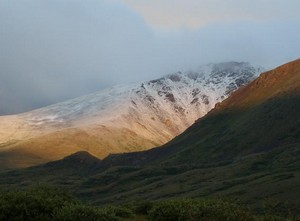
Denver has record setting cool temperatures and snow arrives in the Rocky Mountains. Image courtesy Victor Lewis.
While some parts of the nation experience record setting heat, on Thursday Denver had the opposite problem. The high temperature as measured at Denver International Airport reached a mere 64 degrees. This was two degrees below the previous record low maximum temperature of 66 degrees for this date set in 1925 and previous years. That is also an amazing 24 degrees below the normal temperature for this time of year!
Here in Thornton, we were even cooler than the official temperature on Thursday as the mercury climbed to a mere 61.3 degrees!
The unseasonably cold weather has also brought an unusual sight to the Colorado mountains in July – snow! Some northern parts of the Rocky Mountains in the state above 12,000 feet received a couple inches of snow.
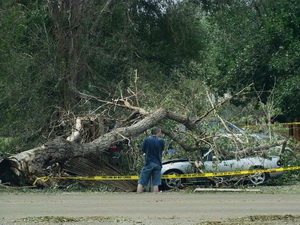
A man surveys damage to a vehicle struck by a fallen tree after last week's storms. The June 20th hail and wind storm has racked up costs of $350 million in insurance claims. Image courtesy Becki Mullen.
Last week’s hail and wind storm that brought destruction to the west Denver suburbs of Wheat Ridge and Arvada caused $350 million in insured damage according to the Rocky Mountain Insurance Information Association (RMIIA). The end result is a storm that now ranks as the second costliest in state history and adds to an already expensive summer storm season.
The July 20th storm has thus far resulted in 52,400 claims, 19,500 of which were for automobile damage and 32,900 were homeowner claims. RMIIA says that damage would have been much higher had the storm struck during daylight hours when more people and vehicles were on the road instead of in their homes and garages.
Massive trees were uprooted, power poles snapped, windows shattered, and automobiles dented beyond repair when the storm brought winds in excess of 60 mph and golf ball sized hail to the area. Two tornadoes also briefly touched down near Castle Rock and Englewood although they were not responsible for significant damage. 90,000 people lost power during the storm and Xcel Energy deployed more than 200 people into the field to restore electricity.
July 12 to July 18 - This week in Denver weather history
A busy week in Denver weather history for sure. Most notable are the occurences of flooding that seem to happen with regularity as well as the costliest hail storm in American history.
11-12
In 1872…heavy rain from 4:00 pm until 2:00 am caused much damage. Rainfall totaled 1.76 inches.
12
In 1881…during the early evening…a brisk rain fell for 30 minutes from a nearly clear sky containing not one tenth of clouds with the sun shining brightly. Rainfall was 0.16 inch.
In 1885…thunderstorms produced widespread lightning across the city during the evening. Several people were injured when their homes were struck by lightning.
In 1954…the high temperature reached 101 degrees at Stapleton Airport.
In 1962…lightning struck and killed a Denver man…while he was assisting a co-worker with his car.
In 1971…the temperature climbed to a high of 101 degrees at Stapleton International Airport.
In 1974…hail to 3/4 inch in diameter fell in Castle Rock.
In 1991…hail to 2 inches in diameter fell in Thornton with golf ball size hail in Brighton. Dime size hail was recorded in the city of Denver. Very heavy rain caused flooding across metro Denver. Water was up to 2 feet deep in parts of Golden where one foot of water was reported in the lot of a mobile home park. Flood water washed away part of a parking lot at the Colorado school of mines in Golden. Heavy rain caused a rock slide and flooding along I-70 in the foothills just west of Denver. Flood waters were a foot deep at the intersection of I-70 and I-25 just north of downtown Denver. A funnel cloud was sighted just east of the rocky mountain arsenal.
In 1996…very heavy rainfall from a fast moving thunderstorm dumped 2 to 3 inches of rain within an hour over southern Jefferson County. Two people were killed near the town of buffalo creek when a 20-foot wall of water flooded the area. Utility poles and trees were uprooted; cars… Propane tanks…and bridges were destroyed in the flood’s path. Entire buildings were moved from their foundations and heavily damaged by the floodwaters. The first fatality occurred along State Highway 126 when the driver of a pick-up truck was washed off the road by the deadly wall of water. The second death occurred farther upstream when a man in a 5th-wheel trailer was washed away. This was the second disaster to strike the area in the last couple of months. The community was already recovering from a wildfire which burned about 12 thousand acres of forest land in late May. With the forest burned by fire…very little vegetation was available to slow the storm’s runoff…which resulted in the flash flood. Power…water…and sewer service were heavily damaged in the flood and…in some cases…beyond repair. The cost of repairing the roads and water system in the area was estimated at around a half million dollars. Elsewhere across metro Denver…severe thunderstorms produced hail…damaging winds…and small tornadoes. Weak tornadoes (f0) were reported in Broomfield… 3 miles east of Englewood…and in Dacono. No damage was reported…except a trampoline was blown into a window and several trees were downed in Broomfield. Thunderstorm wind gusts estimated as high as 60 mph blew a fence down in Louisville where winds also toppled a tree near a house. The house received only minor damage. Large hail…strong winds and heavy rain caused substantial property damage in portions of southeastern Boulder and northern Jefferson counties. Damage estimates in the Broomfield area alone were about 1 million dollars. Winds gusted to 81 mph in Broomfield. Large hail…3/4 to 1 1/2 inches in diameter fell in Evergreen…Lakewood…Englewood…Broomfield…near Morrison…northeast of Boulder…and just east of Denver International Airport.
In 2000…heavy rain fell across a portion of the hi meadow fire burn area near buffalo creek…causing localized flooding. About 3/4 inch of rain fell in 30 minutes over miller gulch. Some culverts become plugged by debris from the fire. As a result…small sections of a u.s. forest service road along miller creek were washed out. Lightning struck a home in Castle Rock…causing extensive damage to the roof…attic…and second floor.
July 5 - July 11 - This week in Denver weather history.
Our look back at this week in Denver weather history reminds us that severe weather can continue to strike, even during what is normally a relatively calm month. Lightning, hail and flooding are three continuous threats as we see during our look back at history this week.
From the National Weather Service:
29-15
In 2000…the 29th marked the beginning of a near record hot streak for metro Denver. The high temperatures…as recorded at Denver International Airport…exceeded the 90 degree mark for 17 consecutive days from June 29th through July 15th. This was one day short of equaling the all time record. The record of 18 consecutive 90 degree or above days was first set from July 1st through July 18th…1874. The record was equaled from July 6th through July 23rd…1901.
4-5
In 1875…nearly every railroad running into the city was damaged by heavy thunderstorm rains. The heavy rains washed out wooden bridges over normally dry creeks. Some trains were entirely suspended. In the city…heavy thunderstorm rain totaled 1.05 inches on the 4th…but only 0.28 inch on the 5th.
4-8
In 1989…one of the most intense heat waves on record roasted metro Denver. The temperature reached 100 degrees or more on 5 consecutive days. The city had previously never recorded more than 2 straight 100-degree days since records began in 1872. Water and electricity usage reached all time highs. The heat wave created extremely dry weather conditions…which contributed to a major forest fire in Boulder canyon on July 9th. The temperature reached 103 degrees on the 8th…and the mercury climbed to 101 degrees on both the 4th and 5th…and to 102 degrees on both the 6th and 7th. The low temperature of 68 degrees on the 8th equaled the record high minimum for the date.
5
In 1908…a late evening thunderstorm produced sustained north winds to 40 mph…hail…and 0.45 inch of precipitation.
In 1949…a dust devil…possibly a small tornado…was observed 3 miles to the northwest of Stapleton Airport.
In 1973…the temperature reached 100 degrees at Stapleton International Airport.
In 1974…strong thunderstorm winds damaged a mobile home…a barn…two houses…and several sheds near Watkins.
In 1975…a thunderstorm wind gust to 53 mph was recorded at Stapleton International Airport. Hail up to 3/4 inch in diameter fell over the northwest suburbs and in northwest Denver.
In 1977 three houses in Denver were struck by lightning. Some heavy damage and fire occurred.
In 1990…lightning caused minor damage to houses in Castle Rock…Louviers…and Littleton.
In 1996…lightning caused only minor damage when it struck a home in Evergreen. Lightning from a fast moving thunderstorm blasted a large hole in the side of a house in Lakewood. Lightning triggered a minor power outage in the Boulder area. About 200 homes were affected.
In 2001…severe thunderstorm winds gusted to 60 mph at Denver International Airport and to 70 mph…7 miles southwest of the airport.
In 2008…microburst winds downed a large tree and some power lines near a Denver apartment complex. Several of the tenants’ vehicles were damaged.
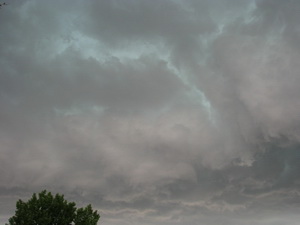
Do these clouds have the potential to bring a tornado? Learn more at National Weather Service storm spotter training.
We have written before about the great opportunity the National Weather Service provides by giving storm spotter training during the start of the severe weather season. Normally these sessions are held in the spring but in response to the very active severe weather of early June, and the increased interest in severe thunderstorms, the National Weather Service in Boulder has added to additional spotter training session next week.
When: Saturday, July 11
Time: 10:00am
Where: Broomfield, CO.
Exact location: Rocky Mountain Metropolitan Airport, Terminal Building, 11755 Airport Way (formerly Jefferson County Airport)
The storm spotter program is a nationwide program with more than 280,000 trained spotters. These volunteers report weather hazards to their local National Weather Service office providing vital information when severe strikes. Data from spotters include severe wind, rain, snow measurements, thunderstorms and hail and of course tornadoes.
Storm spotters are part of the ranks of citizens who form the Nation’s first line of defense against severe weather. There can be no finer reward than to know that their efforts have given communities the precious gift of time–seconds and minutes that can help save lives.
By completing one of these training classes you can become an official storm spotter. When severe weather strikes, you can report it by calling a special toll free number or submit your report via the National Weather Service’s website.
Taking the training though doesn’t obligate you to being a storm spotter. These are great sessions for anyone wanting to learn more about the severe weather we experience in Colorado, whether you want to be an official spotter or not. All training is free. Topics include:
June 28 to July 4 - This week in Denver weather history
As always, an interesting week in Denver and Thornton weather history. Various severe weather items are noteworthy, none more so than on July 2, 2006 when a teenager wearing an iPod was struck with lightning. The music player actually contributed to the teen’s injuries by providing a direct route for the electricity into the victim’s head via the headphones.
From the National Weather Service:
21-3
In 2002…the maximum temperature in Denver equaled or exceeded 90 degrees for 13 consecutive days…equaling the 5th longest such streak on record. The record of 18 consecutive days was set during the summer of 1901.
28
In 1873…there was a great deal of smoke over the city from forest fires in the mountains.
In 1875…smoke from forest fires in the foothills south of Denver were visible from the city.
In 1913…an apparent dry microburst produced southwest winds sustained to 44 mph with gusts to 48 mph in the city.
In 1925…a thunderstorm produced north winds sustained to 38 mph with gusts to 44 mph.
In 1958…a microburst caused a brief wind gust to 58 mph at Stapleton Airport.
In 1964…lightning struck several homes in metro Denver… Sparking fires. Some flooding occurred in the stockyards area…at West 45th Avenue and St. Paul Street…and along Harvard Gulch.
In 1997…strong microburst winds of unknown speed downed several trees…signs…and at least one light pole in the Fort Lupton area. Two trees knocked over by the storm downed power lines causing scattered outages.
In 2002…a thunderstorm wind gust to 60 mph was recorded in Parker.
In 2005…severe thunderstorms produced wind gusts to 66 mph near Longmont and to 60 mph near Niwot. No damage was reported. A thunderstorm produced a wind gust to 55 mph at Denver International Airport during the afternoon.
29
In 1874…eight different fires in mountain forests were visible from the city. All of the fires were extensive… And the volume of smoke from each was immense. Three of these fires had been burning from the 18th with varied intensity.
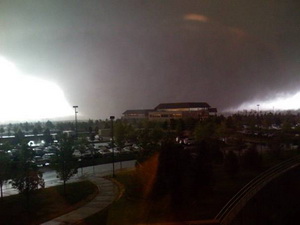
The town of Windsor, Colorado was forever changed when an EF3 tornado ripped through it one year ago today.
May 22, 2008 was like most any spring day along the Colorado Front Range. The morning started out a bit warmer than usual and it was more humid but there was nothing to indicate the havoc that was soon to be visited upon Windsor, Colorado.
As the morning wore on, high above the plains the jet stream was moving at 120 mph and temperatures were warming quickly. From Denver looking north huge clouds began to build miles into the sky – an ominous sign of what was to come. A supercell thunderstorm, one more like what you expect to see in Oklahoma, was forming quickly.
At 11:30am the warnings were going out from the National Weather Service. This was not your typical thunderstorm. Soon a Gilcrest police officer radioed, “We have a tornado on the ground!”
Three tornadoes touched down that morning in northern Colorado but one stands out. The supercell that was near Windsor was growing in size and the twister that developed was massive – ¾ of a mile wide. Rated by the National Weather Service as an EF3 on the Enhanced Fujita Scale with winds in excess of 136 mph, what was described as a “big, black monster” would tear a path 35 miles long.
A tornado touched down in Mesa County on Tuesday - only the ninth twister since 1950 in the county. (File photo)
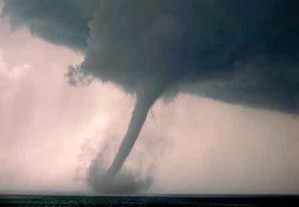
Mesa County, Colorado reported a rare tornado on Tuesday afternoon. The National Weather Service in Grand Junction reports that the twister touched down in an open area around 3:25pm yesterday near Mount Garfield (map).
The Associated Press reported that Meteorologist Jeff Colton said a National Weather Service employee was in the area and saw it happen. No damage or injuries were reported.
This was only the ninth tornado recorded in Mesa County since 1950 and the first since August 2, 2005.
In the United States, the winter is generally considered ‘flu season’ and is when we see it most widespread. With the threat of a potential swine flu epidemic, analysts are trying to determine if the weather will play any factor in the spread of the virus.
The flu is spread through contact with an infected person or pig, typically through coughing or sneezing. In the winter, when most people in temperate regions like the United States are spending time indoors in closed environments and in close quarters with those that are infected, it is thought that the flu can be transmitted easier. The water droplets containing the virus are slower to evaporate in cooler weather thus remaining airborne for longer periods of time and increasing chances of others becoming infected.
Outbreaks can and do occur in the tropics however research indicates they occur with less frequency in places that do not have the seasonality that other areas do. Limited laboratory and health data from regions like Africa and Latin America have made it more difficult to track the spread of viruses and thus learn from it.
The World Meteorological Organization (WMO) said on Monday that it hoped drier and warmer weather would help stifle the effects of the swine flu. The organization is asking health authorities to work with weather services to assess the role of weather and the climate in the outbreak as this is an aspect that is not fully known. WMO spokeswoman Gaelle Sevenier said , “The transmission patterns of this particular influenza and its possible seasonality are as yet not adequately understood and are the subject of ongoing investigations.”

 For more details on this temblor including maps and a look at Colorado’s earthquake history, view the complete story on Examiner.com.